This week, my family and I went on a trip to Alcúdia, Mallorca. It’s a town that exists at an interesting intersection, between a rich Roman-Moorish history and an overwhelming catering to visitors. My time here led me to question how tourism shapes the identity of a place – how Mallorcan is Mallorca? These photos were taken over a few slow, sun-drenched days, where we explored the changing rhythms of the town between its past and the future it’s carving out for itself.
Alcúdia Market
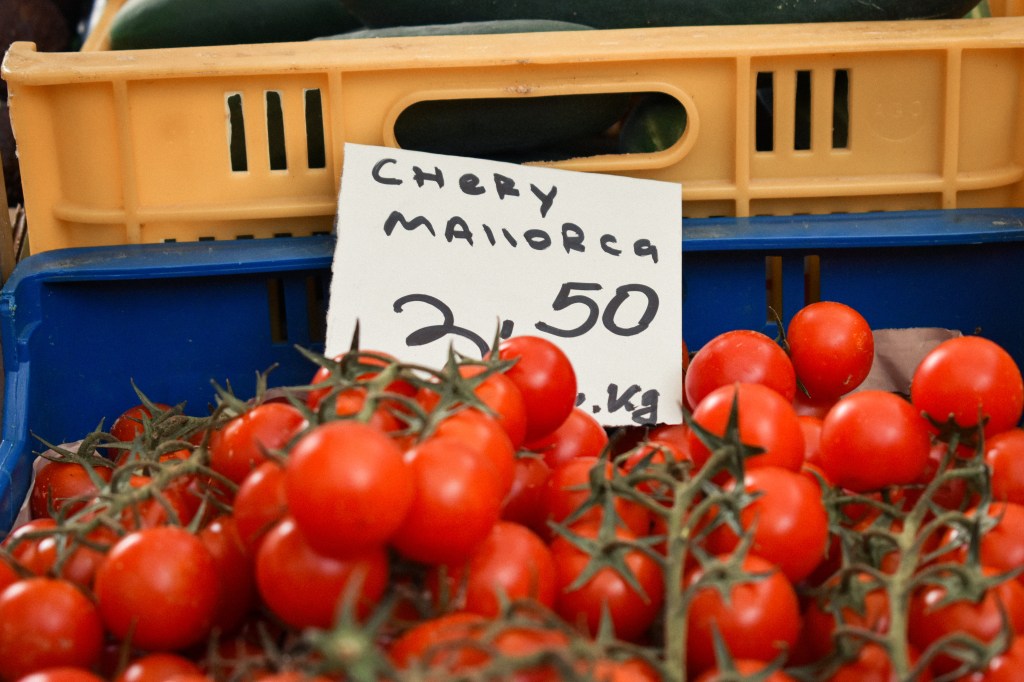
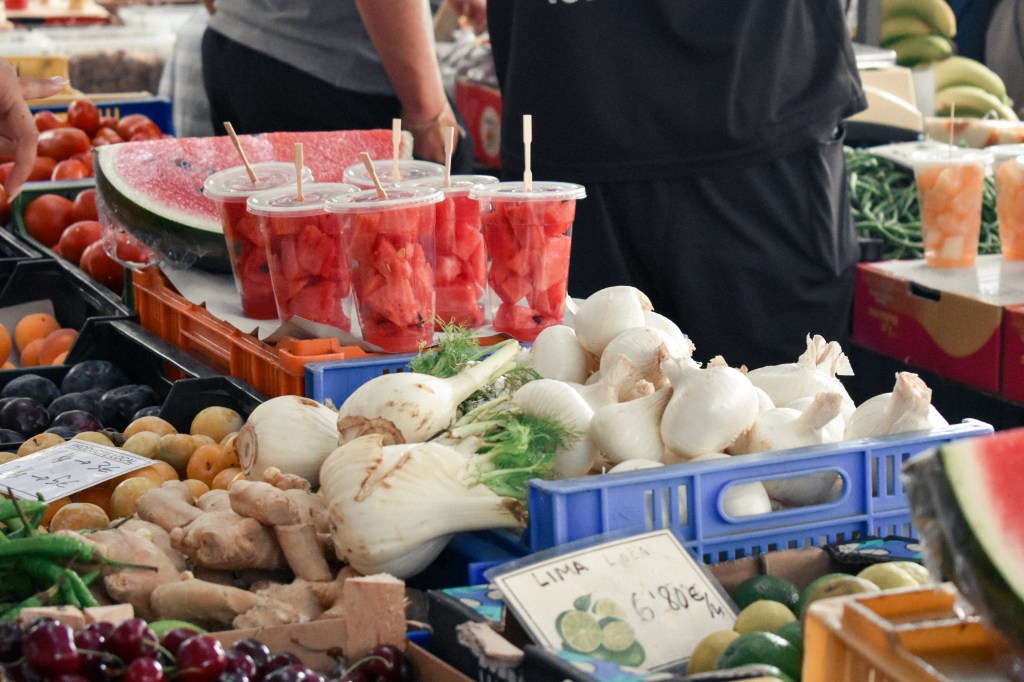
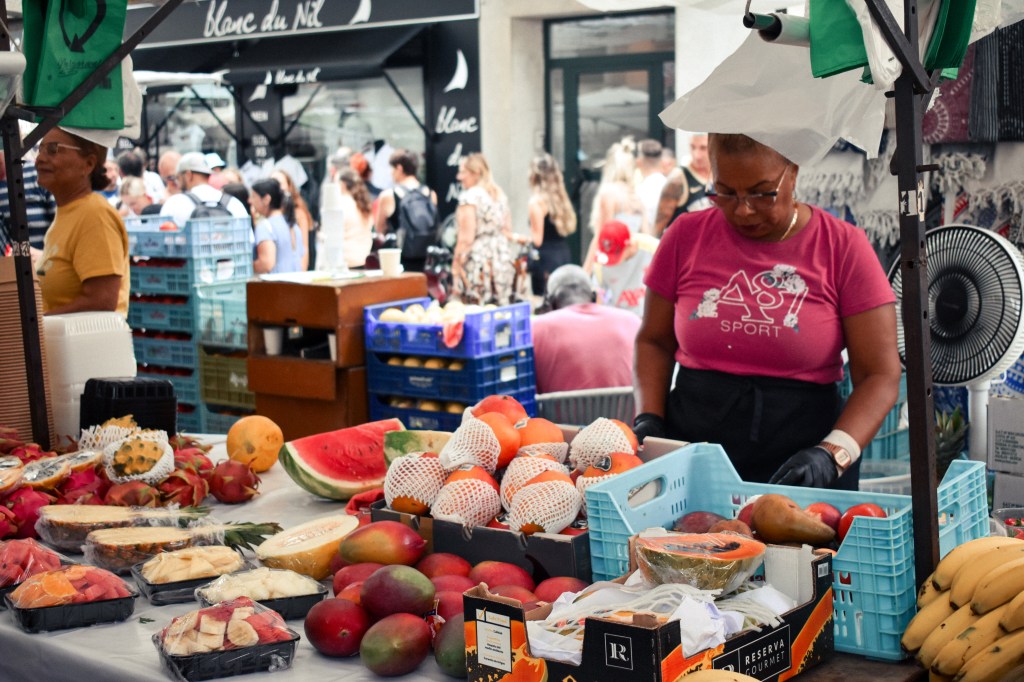
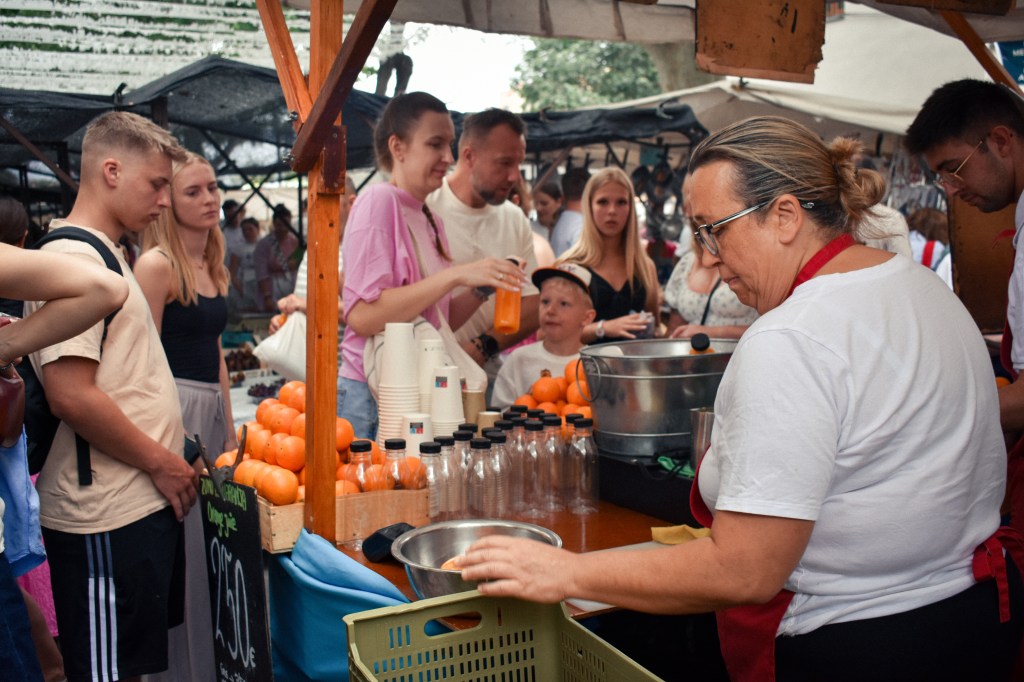
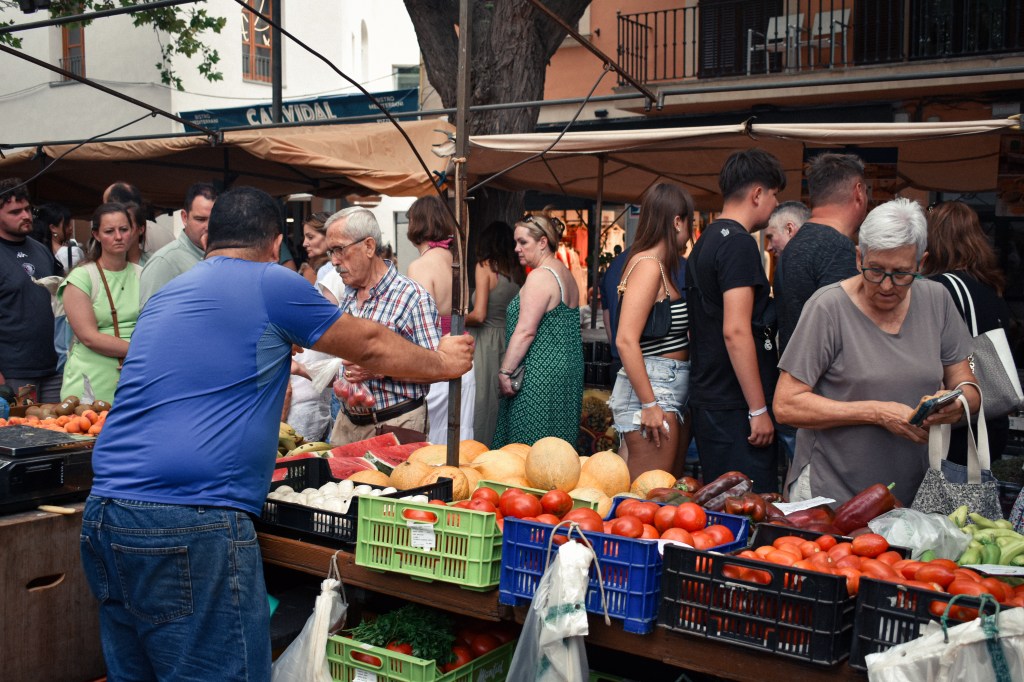
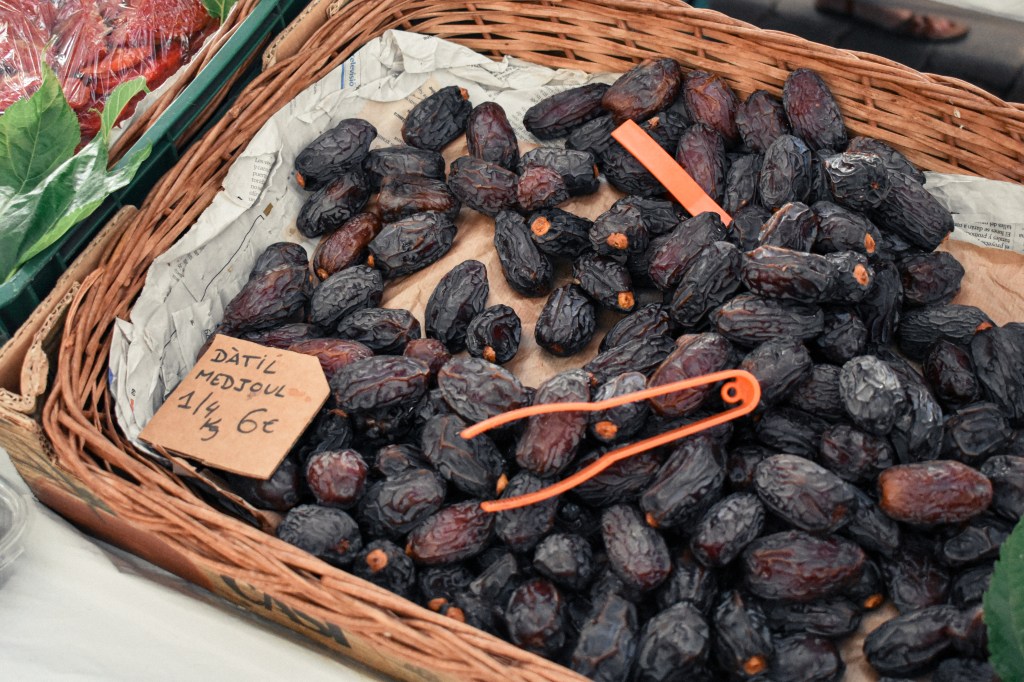
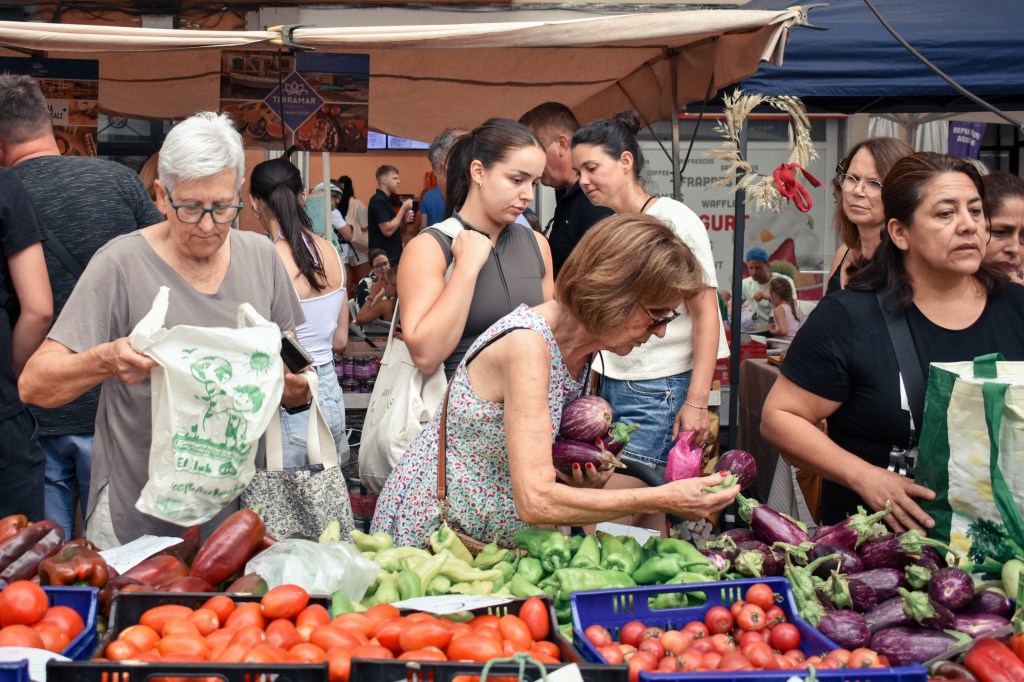
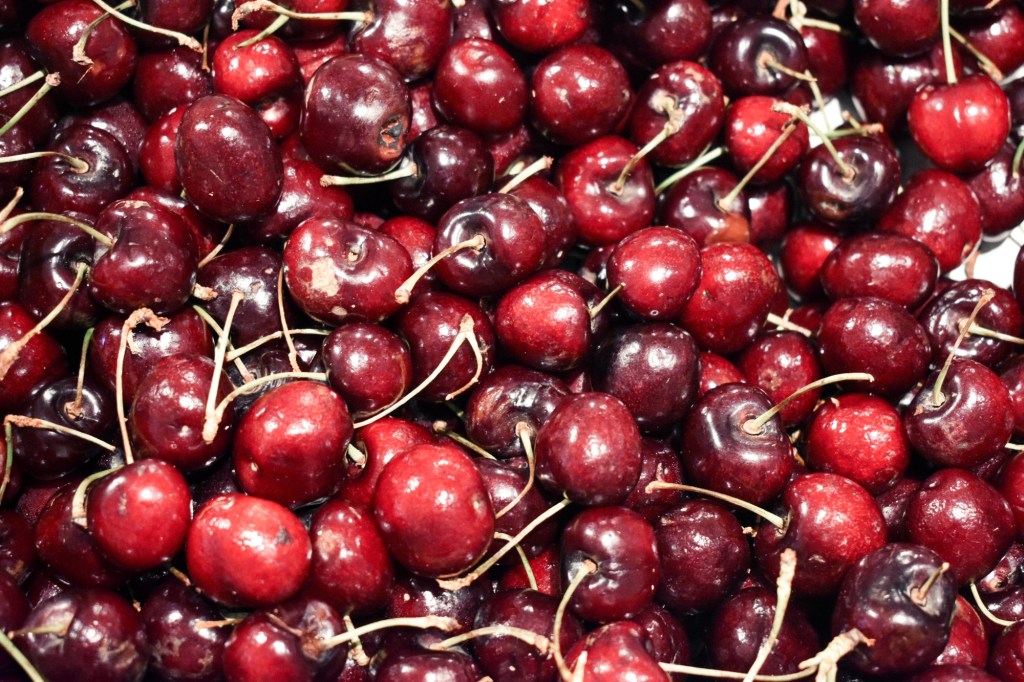
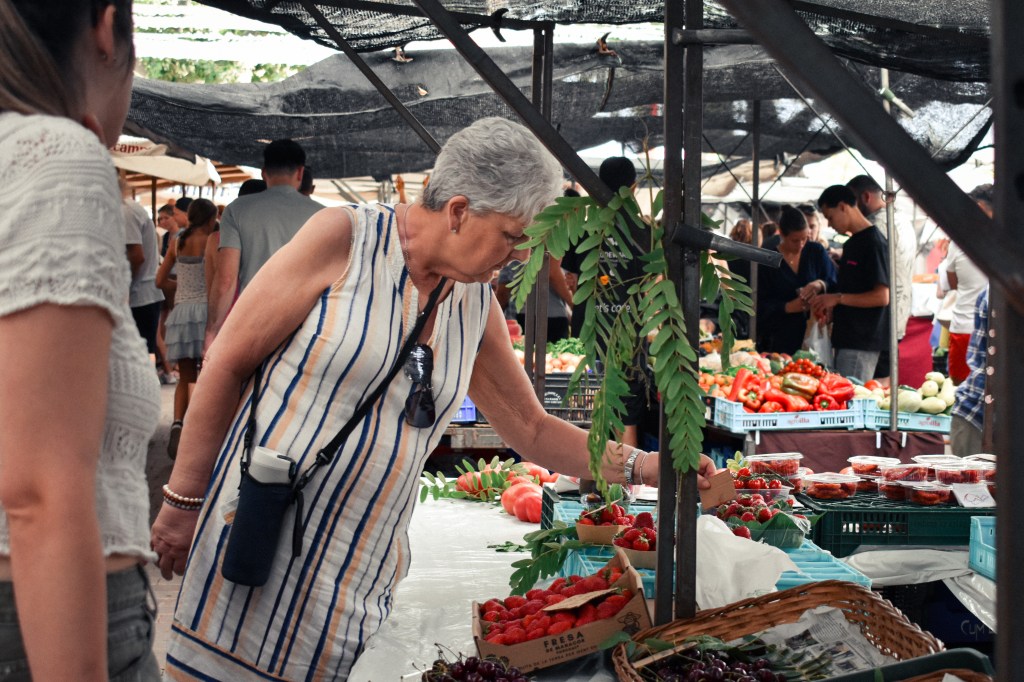
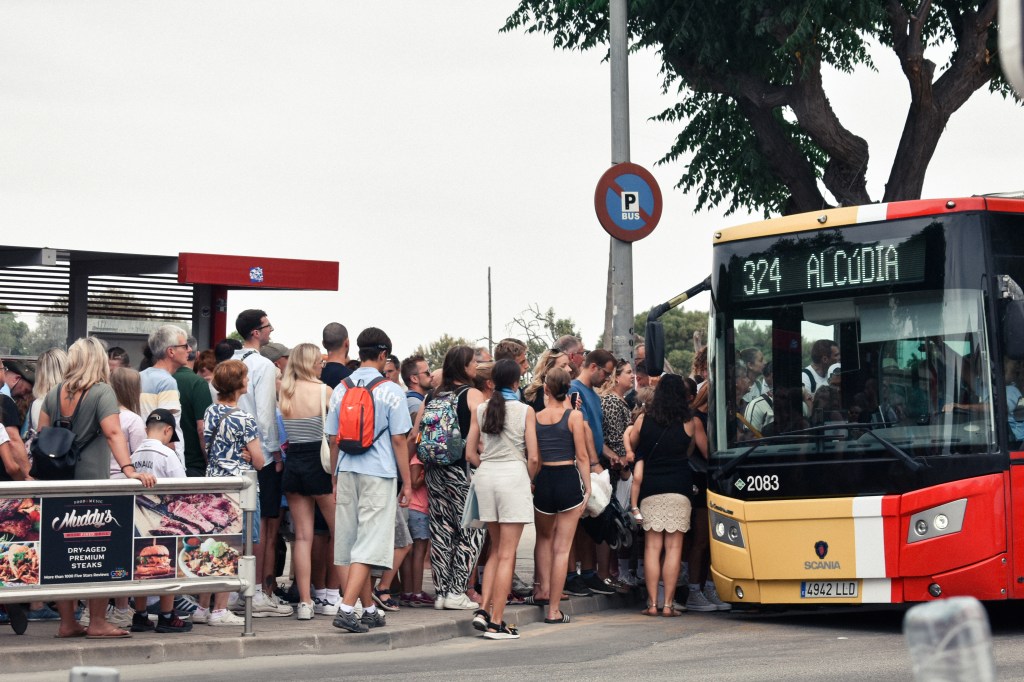
The Alcúdia Market meets every Tuesday and Sunday for the morning. We thought we’d swing by for some light shopping, having no real idea what we were in for. I’ve never seen so many people waiting to get into a market, which raised my expectations, but I can confirm they were met. Of course, there were rows of linen dresses, racks of magnets, and quintessential, yapping puppy toys, but I was only really interested in the food scene.
The sun dimmed under the reaching canopy as we walked through to the food stalls. Reams and reams of huge fruits and wonky vegetables, stacked in proud pyramids. Boastful in some way – quartered watermelons the size of a small child – and some entirely unfamiliar. Every piece being picked up and observed, given its own time of day. It was as if these vendors understood our British need to devour these treasures then and there. I watched as kids reached for cups of cubed melon and bottles of freshly squeezed orange juice to wander around with. They knew what they were doing here.
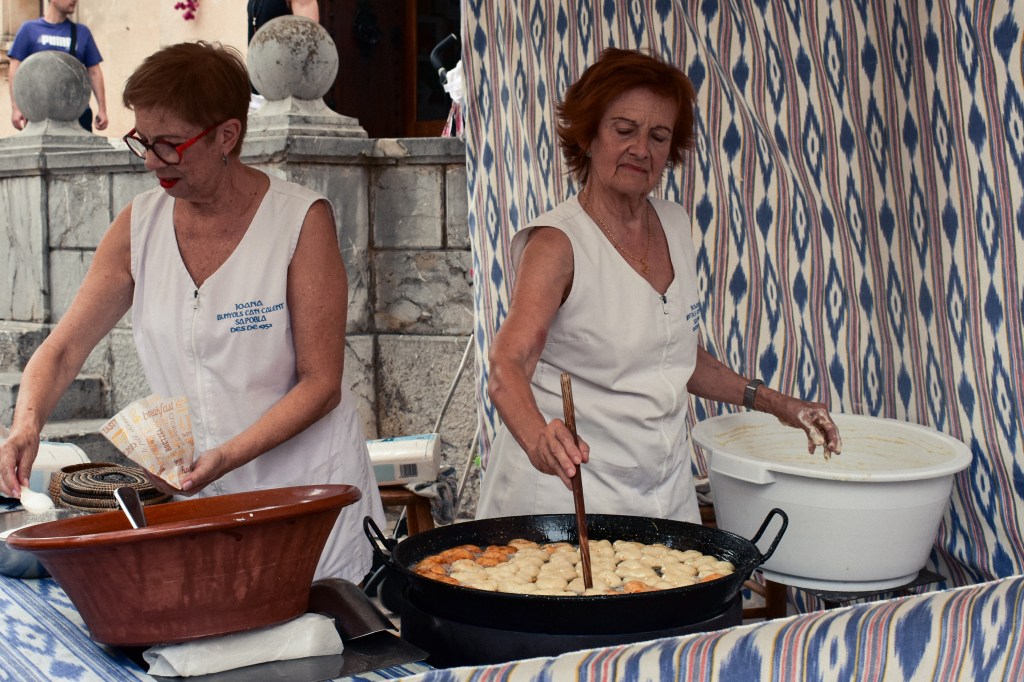
I also tried buñuelos for the first time and, suffice to say, had my mind blown. I’ve been craving them ever since. They’re the softest pockets of dough, lightly crisped by the fryer. I read that there are several iterations of the buñuelo, eaten over almost every continent. It has a relative in the beignet, if you’re familiar. In the Balearic Islands, they’re often made with potato or sweet potato, sometimes filled with Mahón cheese or dried figs, which I wish I tried. Looking at the photo I took of those two women flipping them fresh, I can smell the sweetness in the air – what I wouldn’t do for one now.
Alcúdia Old Town
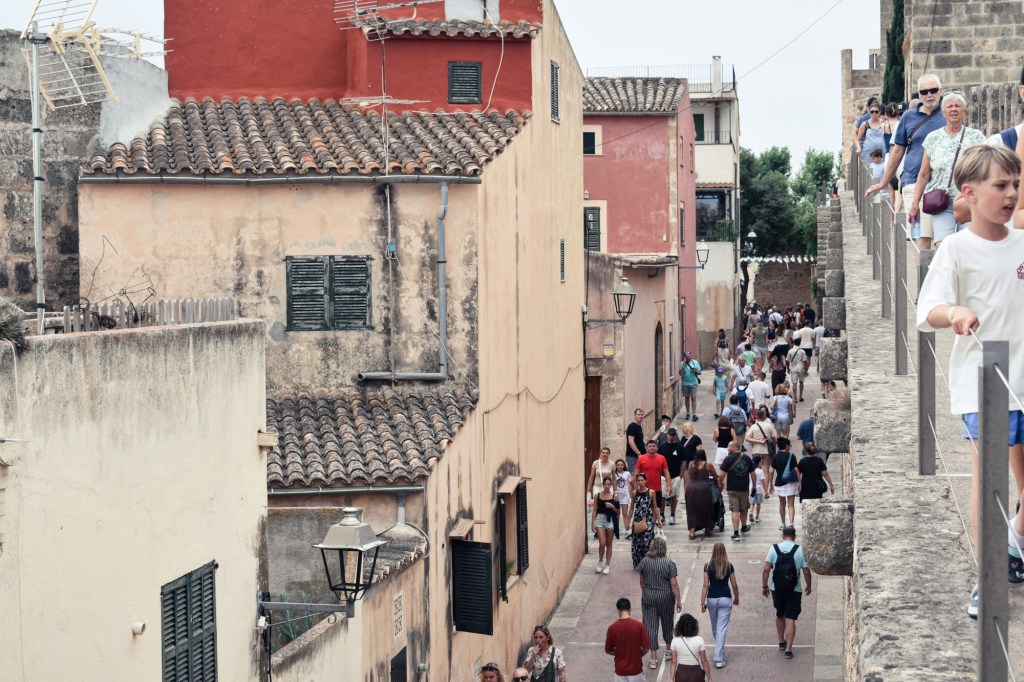
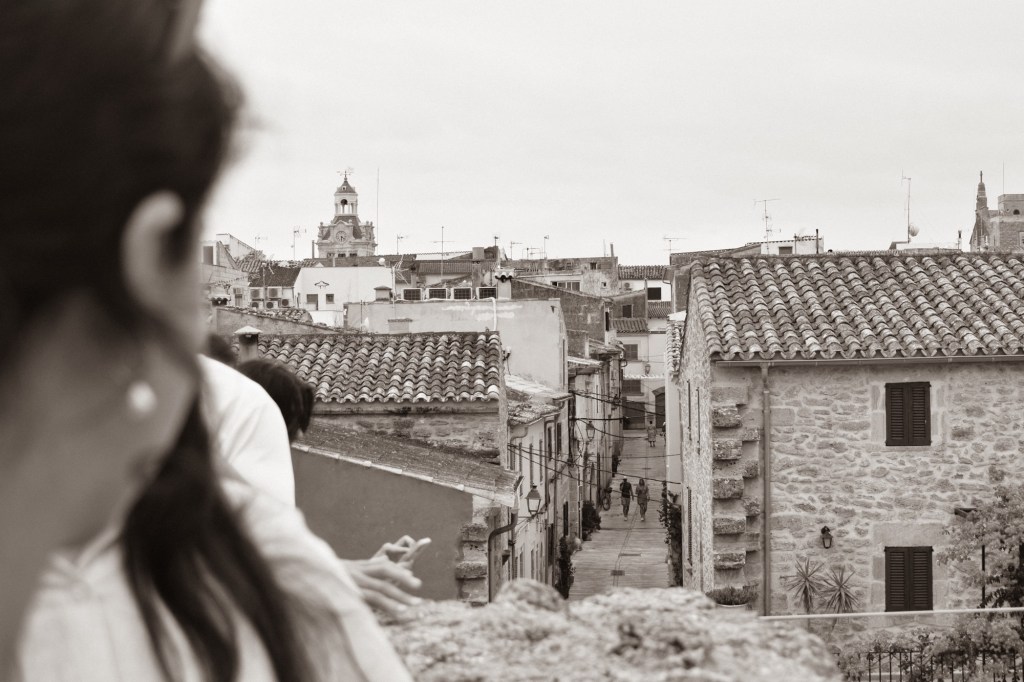
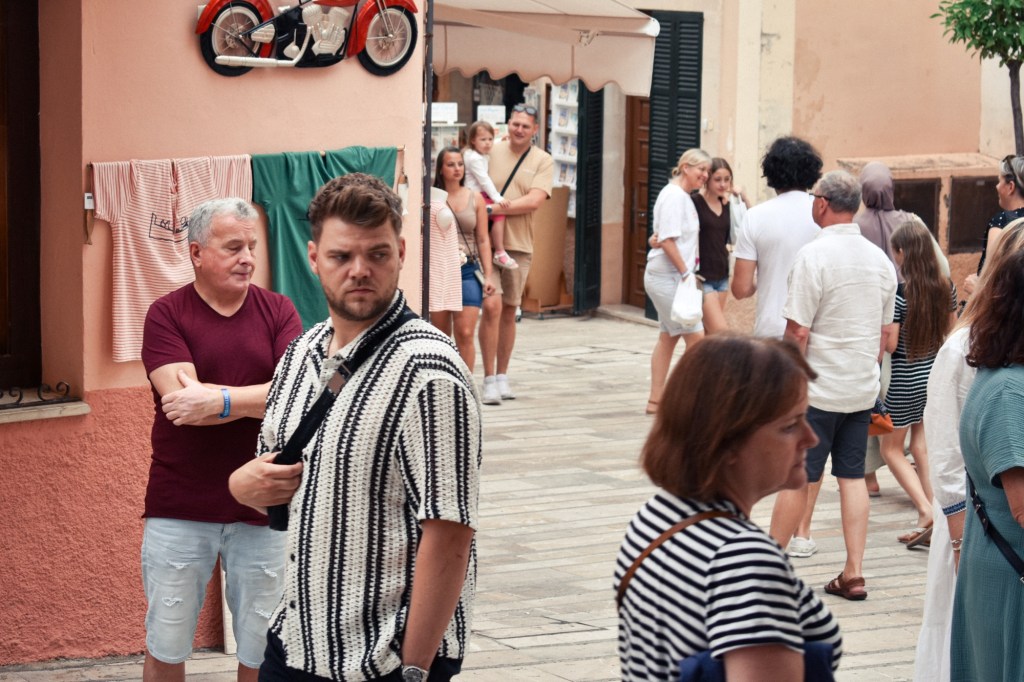
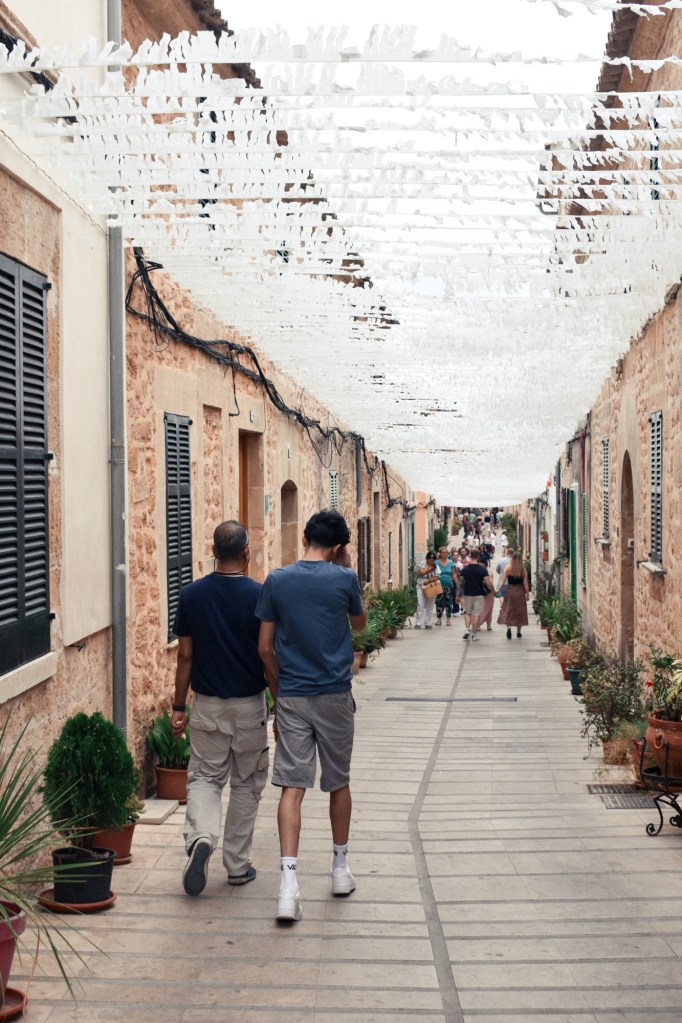
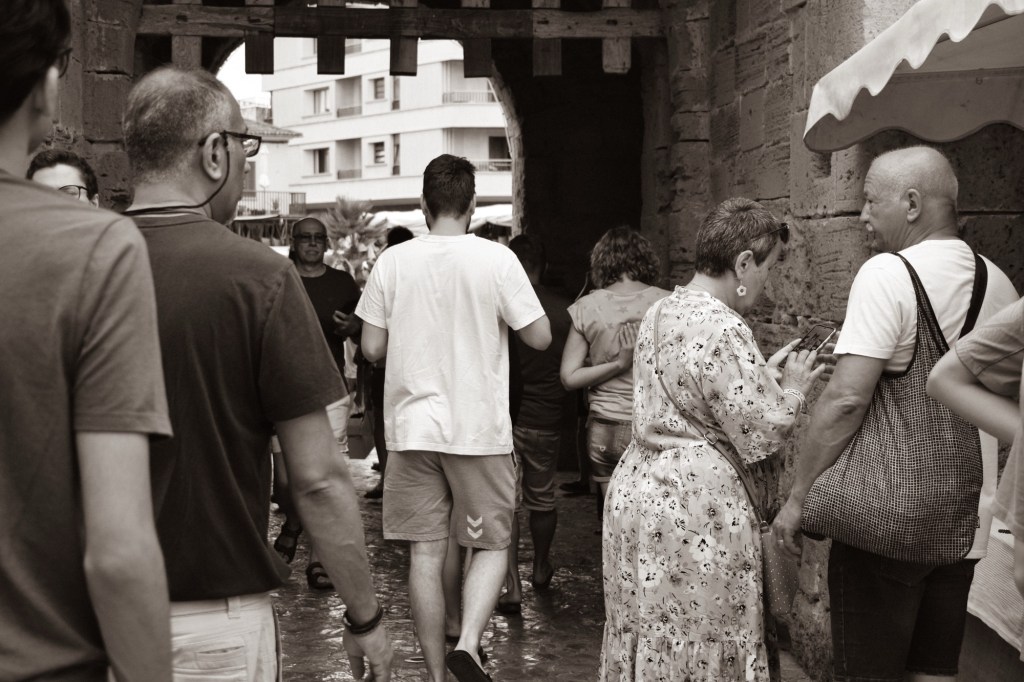
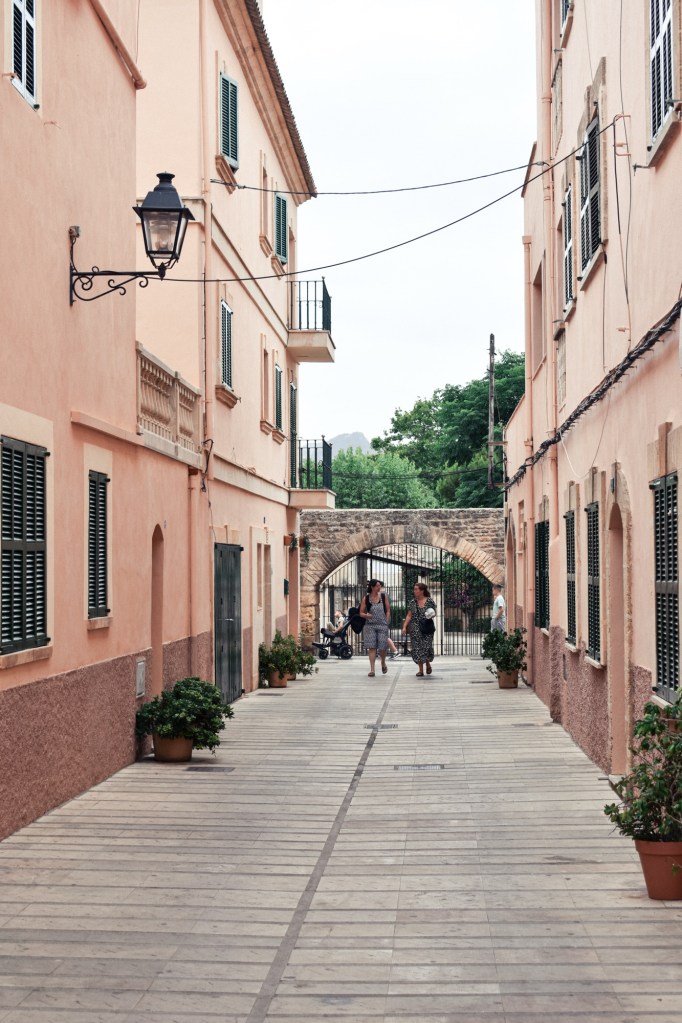
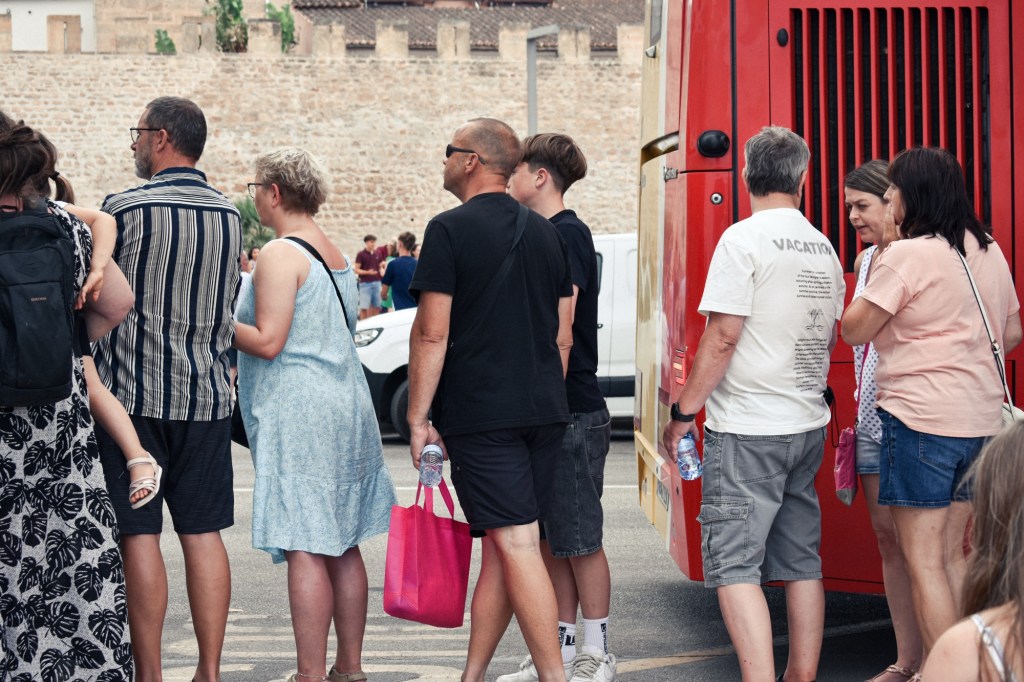
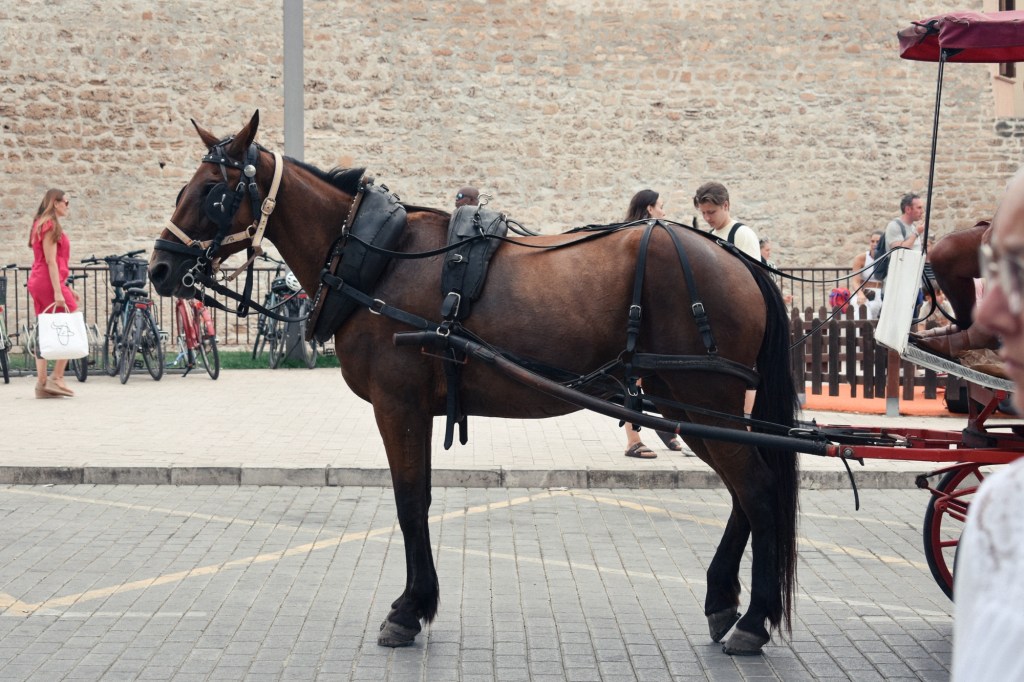
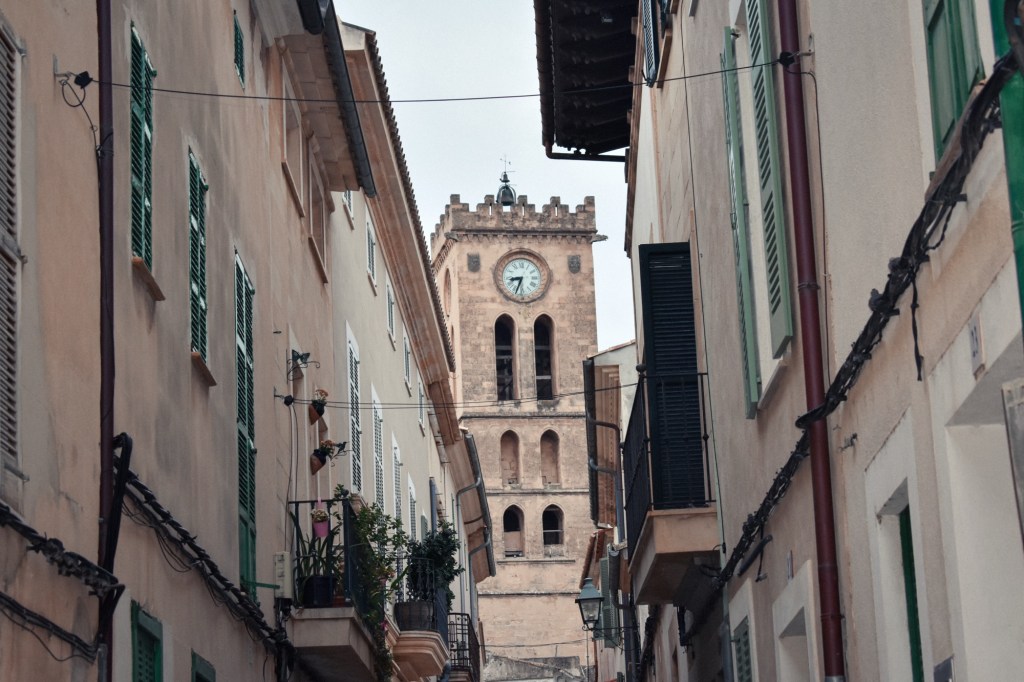
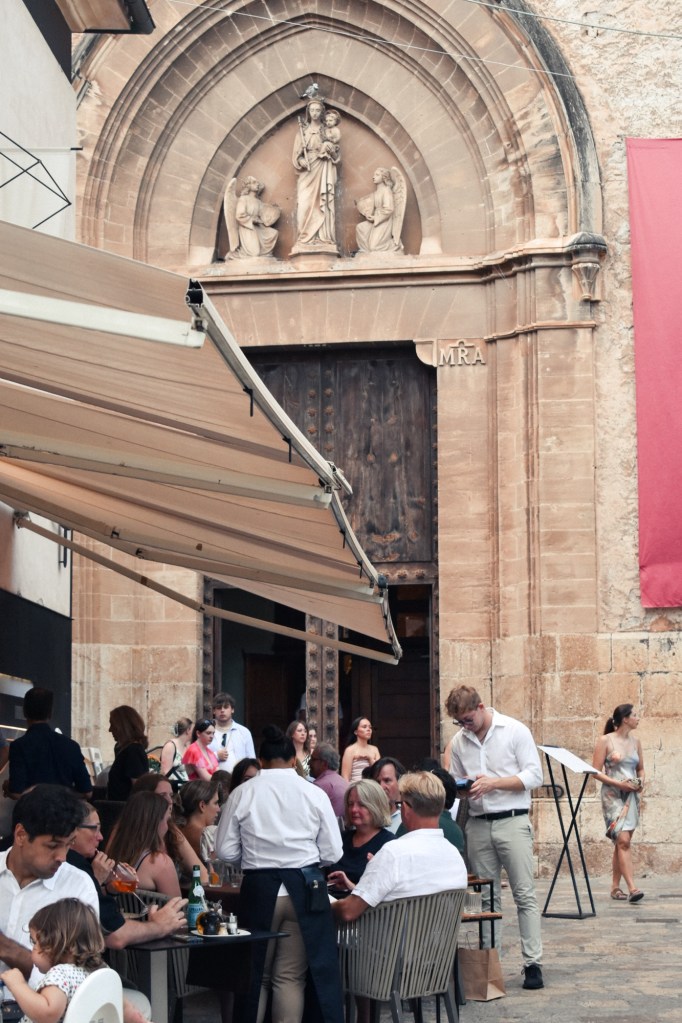
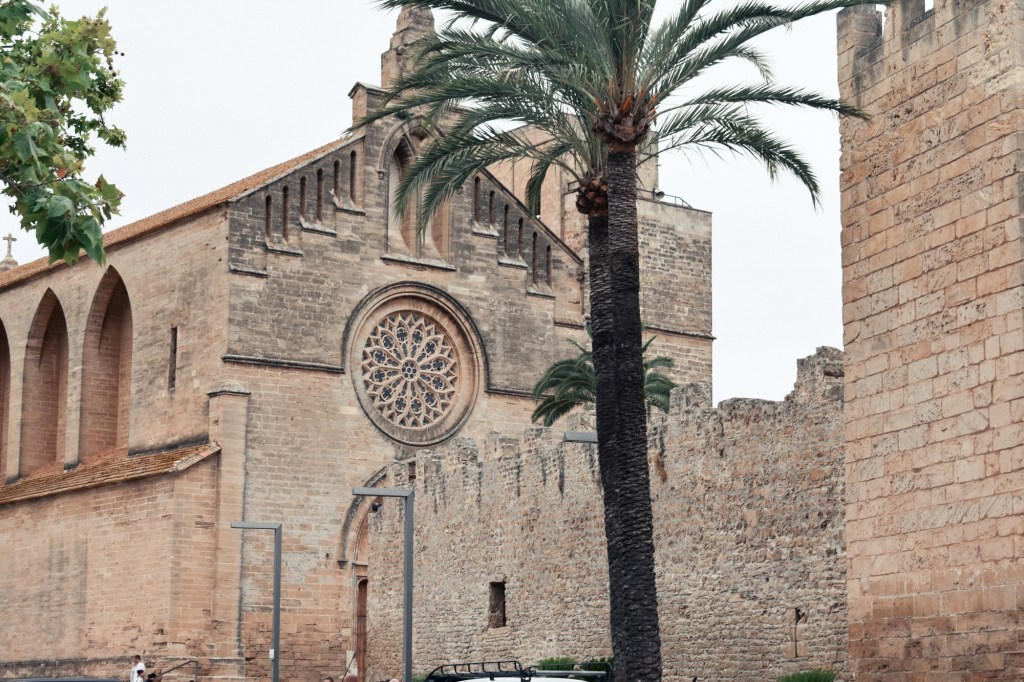
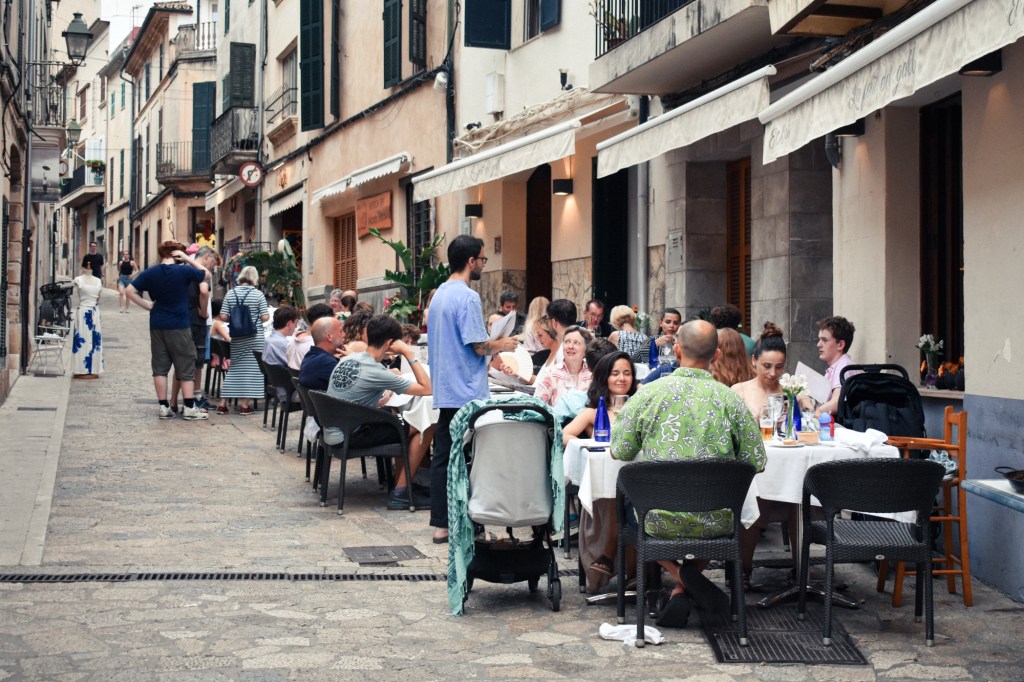
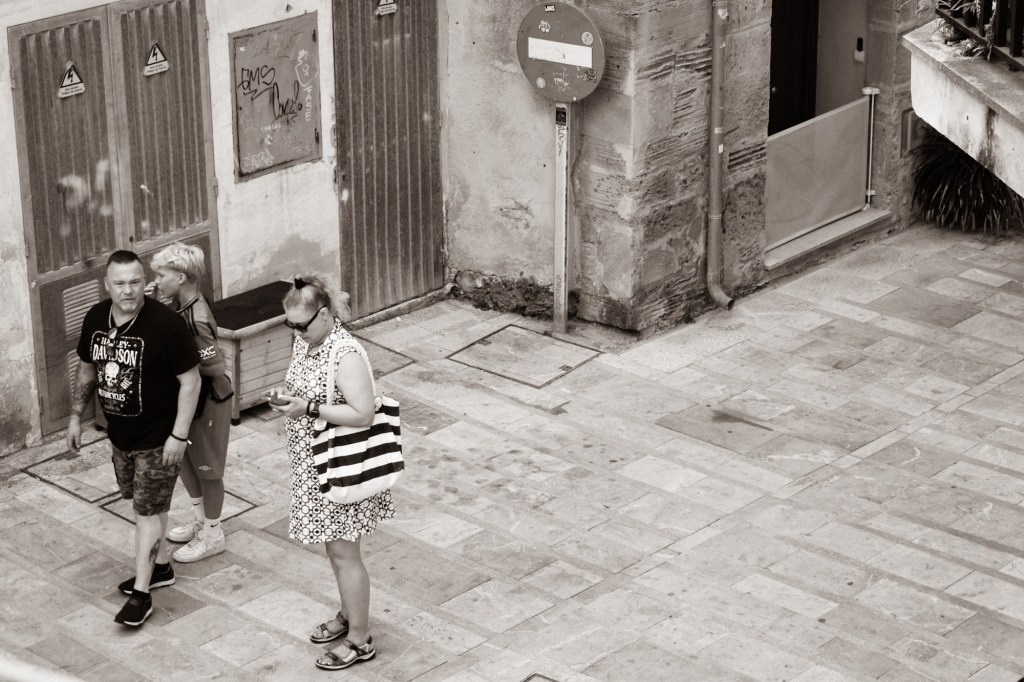
It’s true, unfortunately, that while exploring you get the feeling that your presence as a tourist was anticipated. The walls of the town itself remain truly Mallorcan, but many of the shopfronts are reiterations of the same keychain racks and linen shirts. I read a little about over-tourism on the island – “where there used to be traditional and authentic retail shops aimed at locals, there are now boutique-type shops from franchises and big commercial chains aimed at tourists.” (Staykova, 2023)
Palma de Mallorca
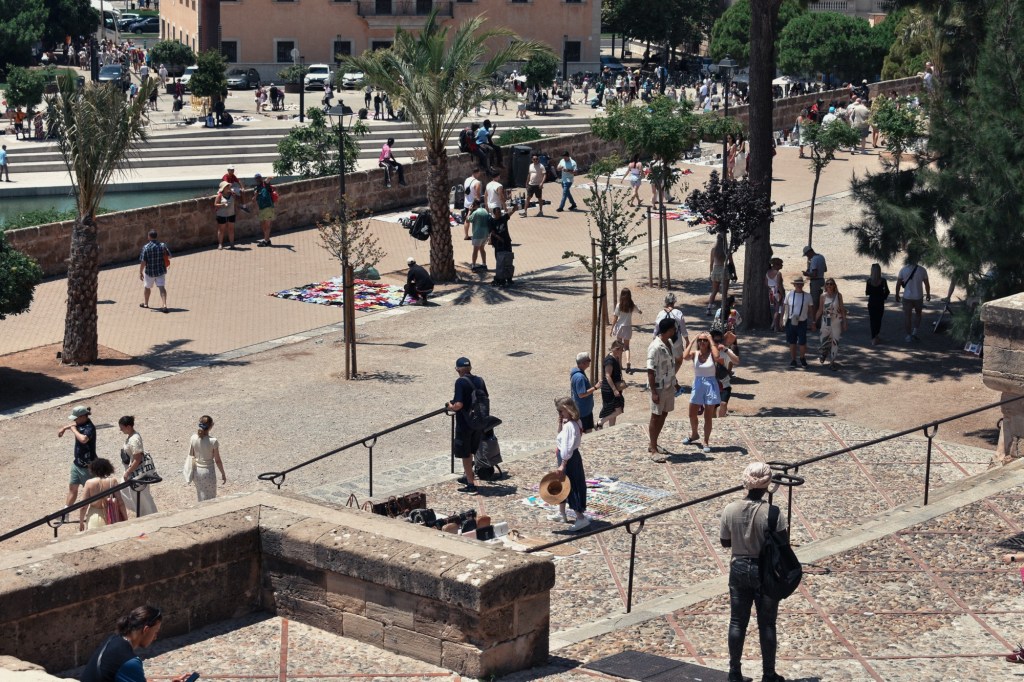
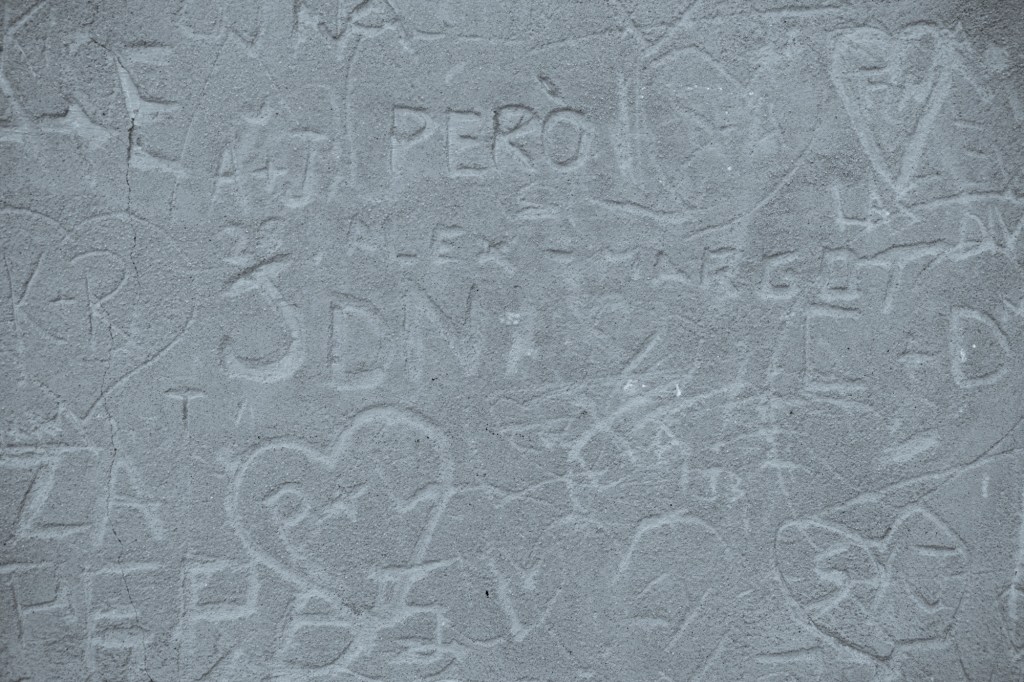
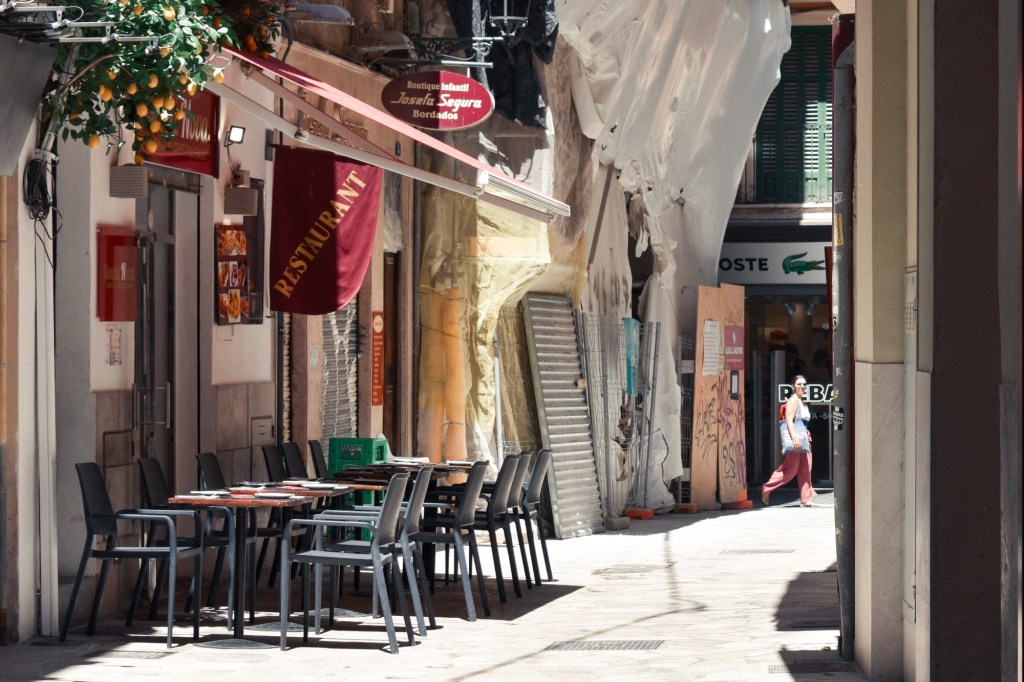
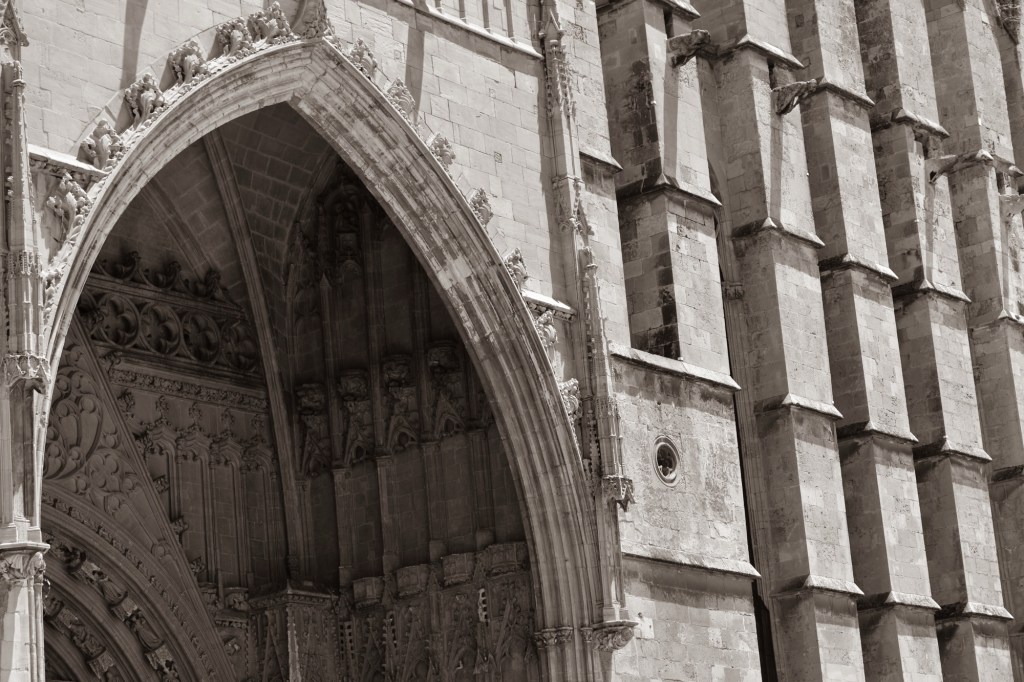
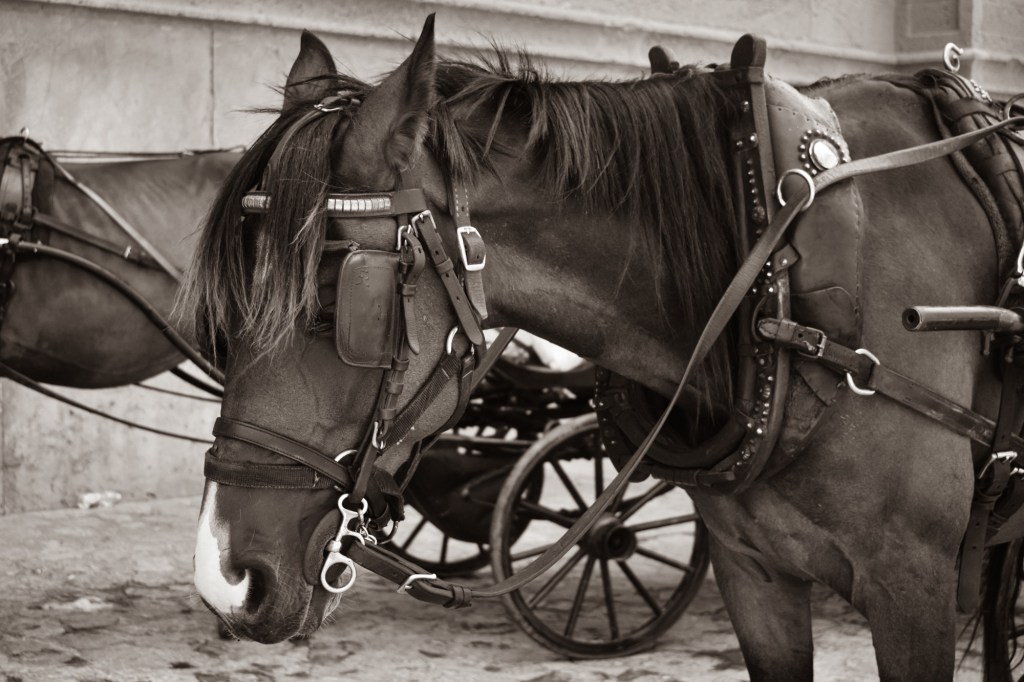
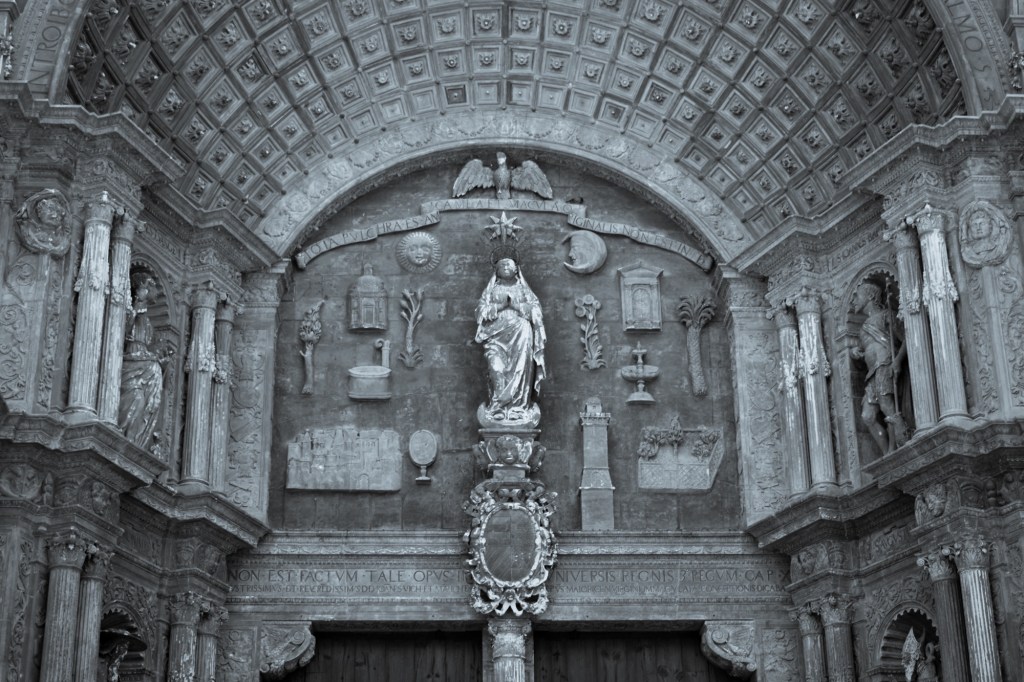
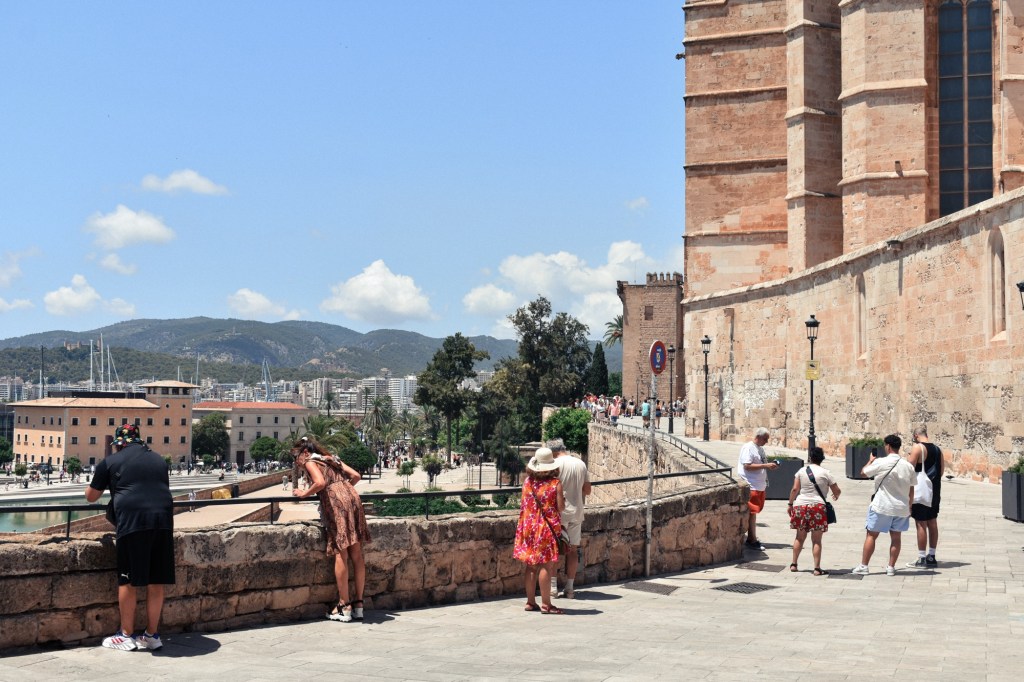
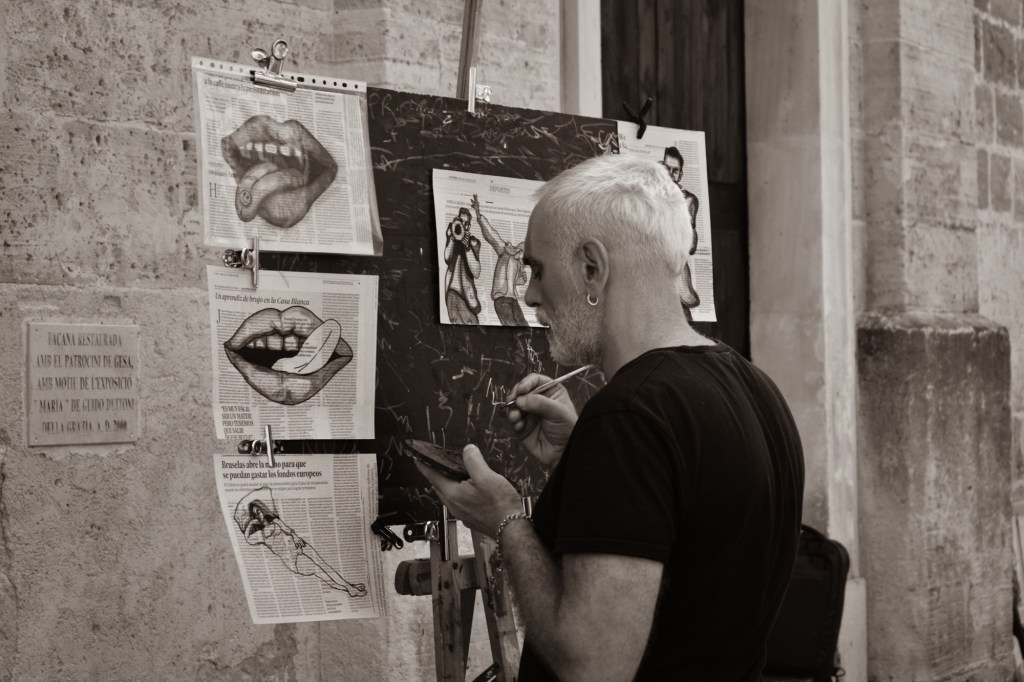
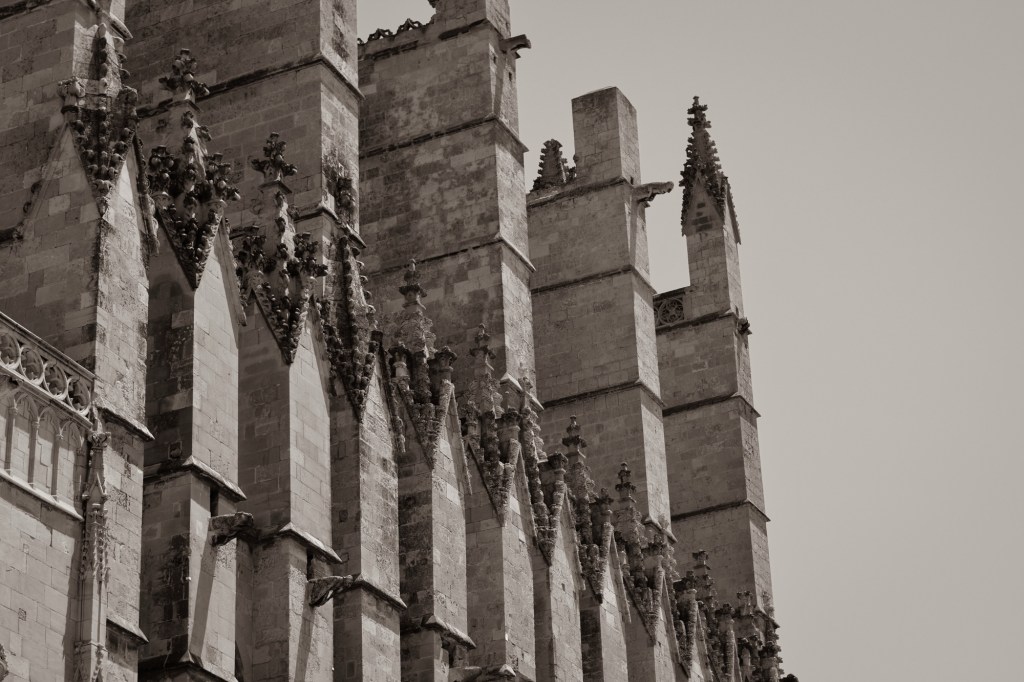
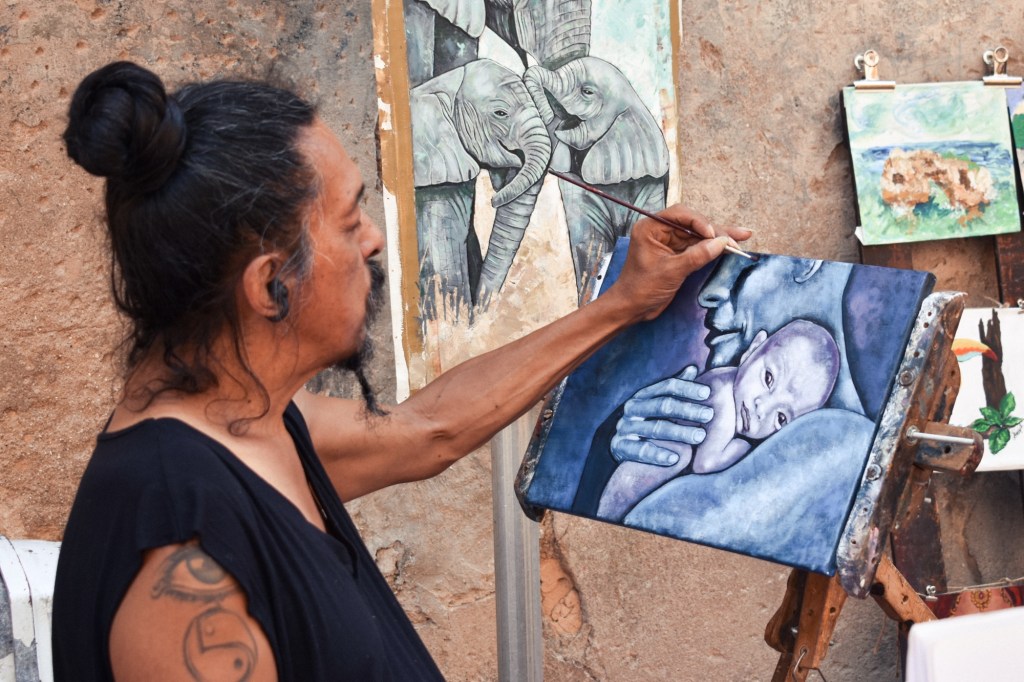
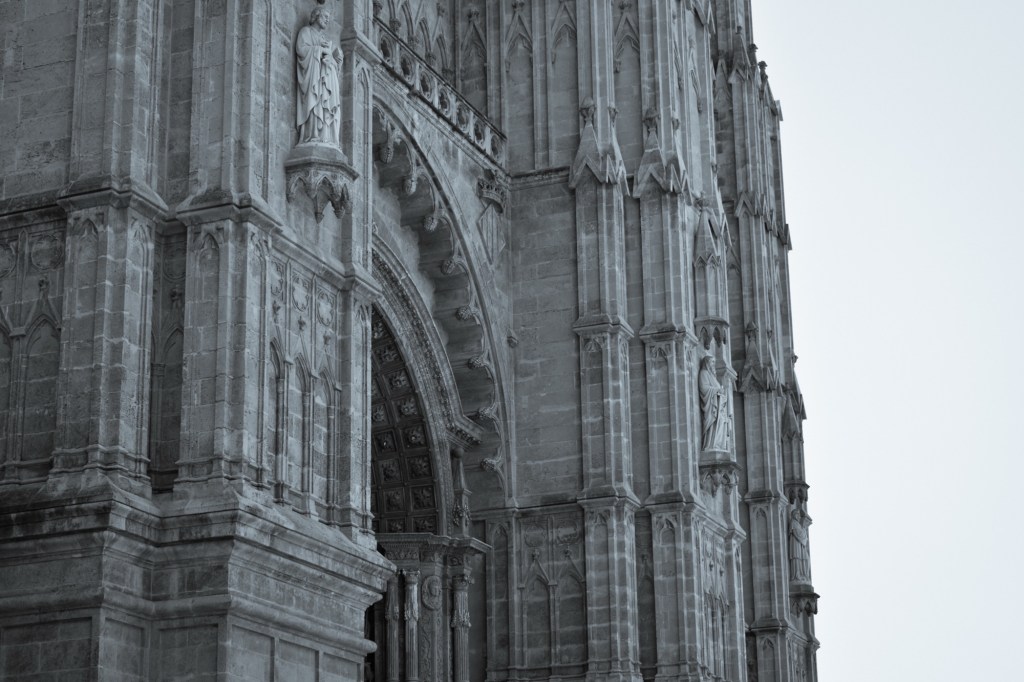
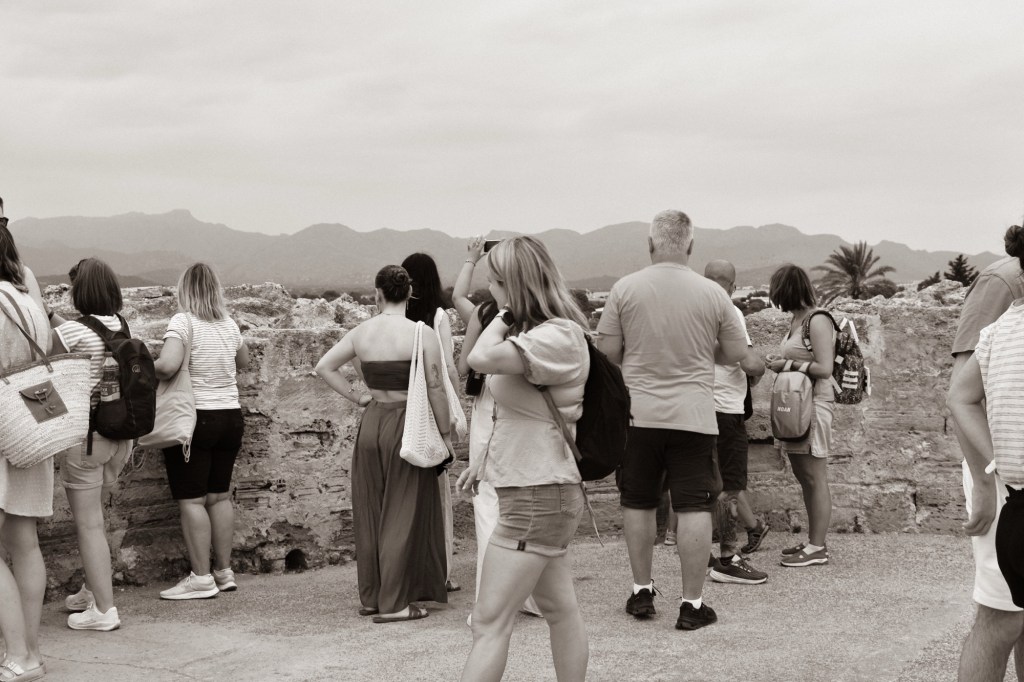
We took a day trip to the other side of the island to visit the main attraction, Palma. It’s the capital of Las Islas Baleares, the Balearic Islands, and a city where Mallorca’s cultural clashes come into sharper focus. It’s steeped in a rich history, particularly marked by La Palacio Real de La Almudaina (pictured above), a Muslim fortress turned royal residence on the edge of the town. Further inland, though, Palma’s heart beats for its guests. Tour buses spatter its streets, and tapas restaurants with multilingual menus fill its squares. It manufactures a feeling I can’t quite describe. I read that Palma has tried to curb over-tourism by restricting cruise ships and short-term rentals, for example, but you can’t help but feel the tension this tug-of-war has manifested in.
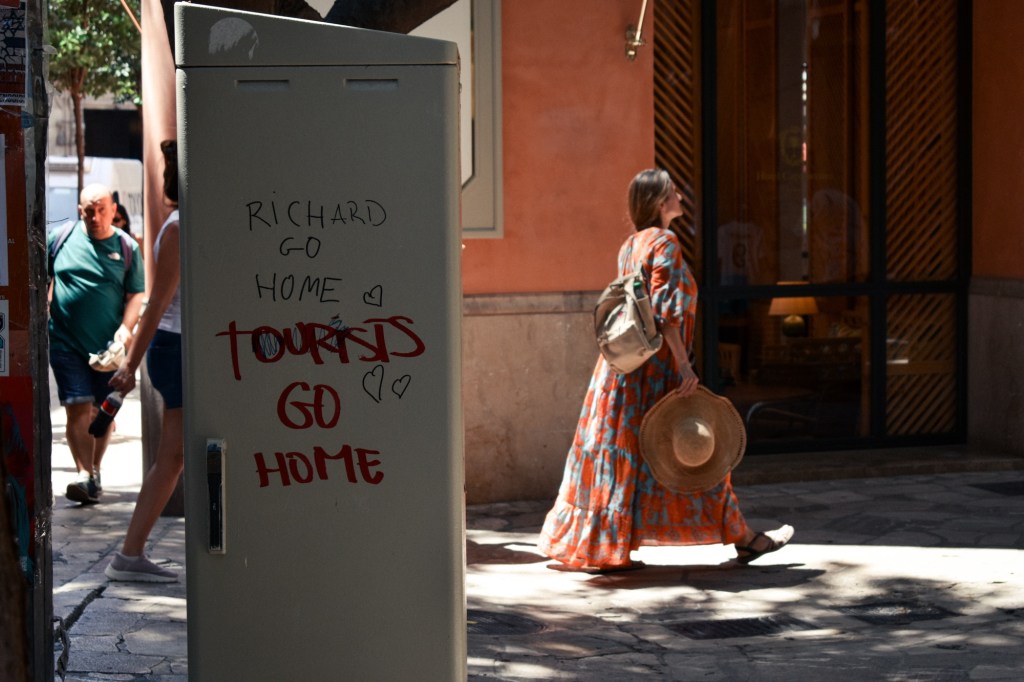
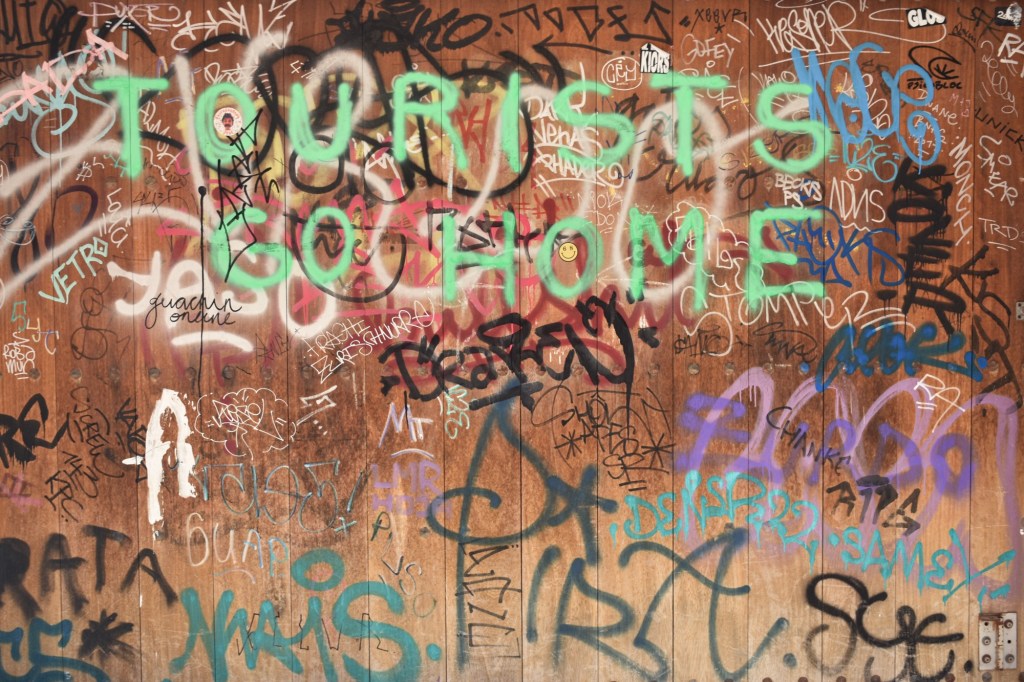
In trying to preserve a version of its charm for the visiting eye, it seems to have become a softened version of itself. I was thinking, then, about the cost of visibility – what are the parts of this place that got lost when it started to perform parts of itself? The bones are still Mallorcan, of course, but I wonder how this place will continue to preserve its soul.
Las Rocas y Las Calas
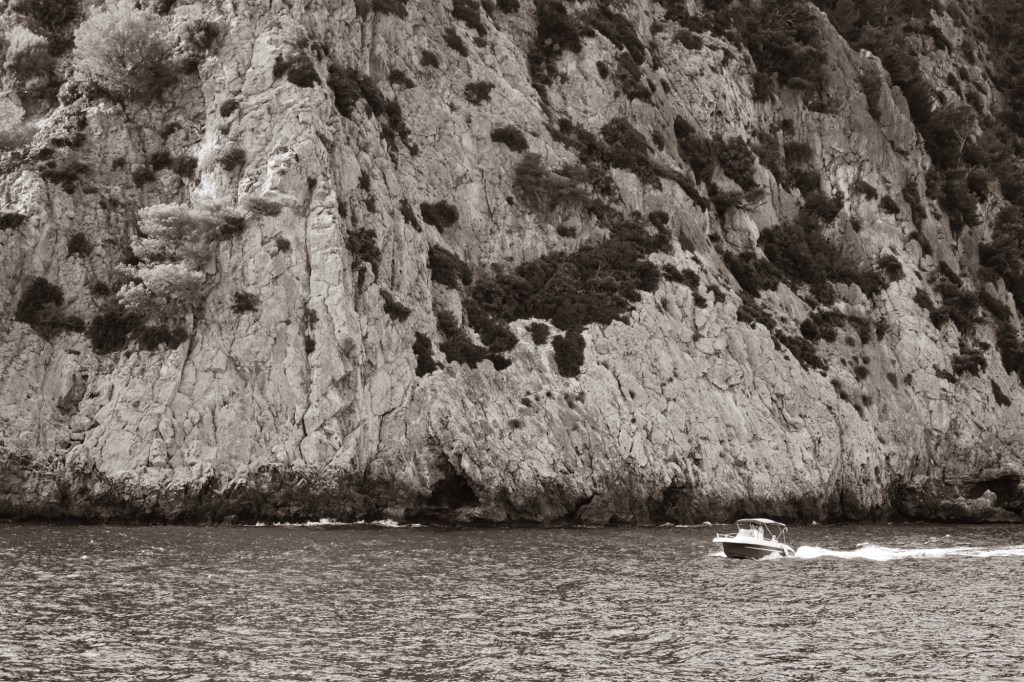
We spent one beautiful evening in a boat, sailing beneath las rocas and dipping into las calas. The rocks and coves are unbelievable. Accessible only by boat, they’re near silent, still and grand, old as imaginable.
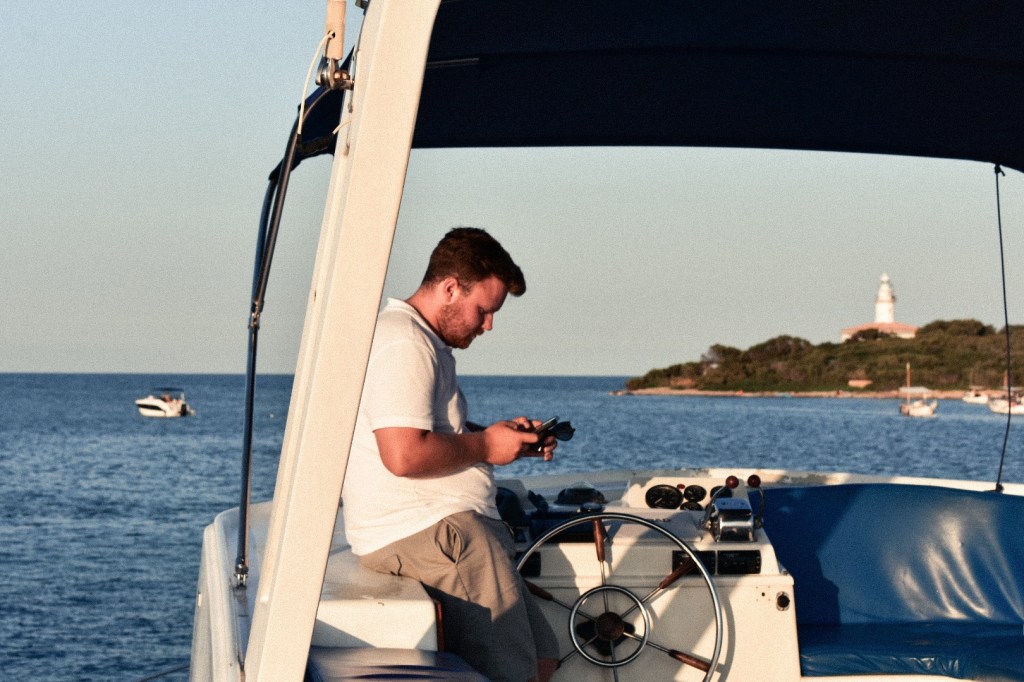
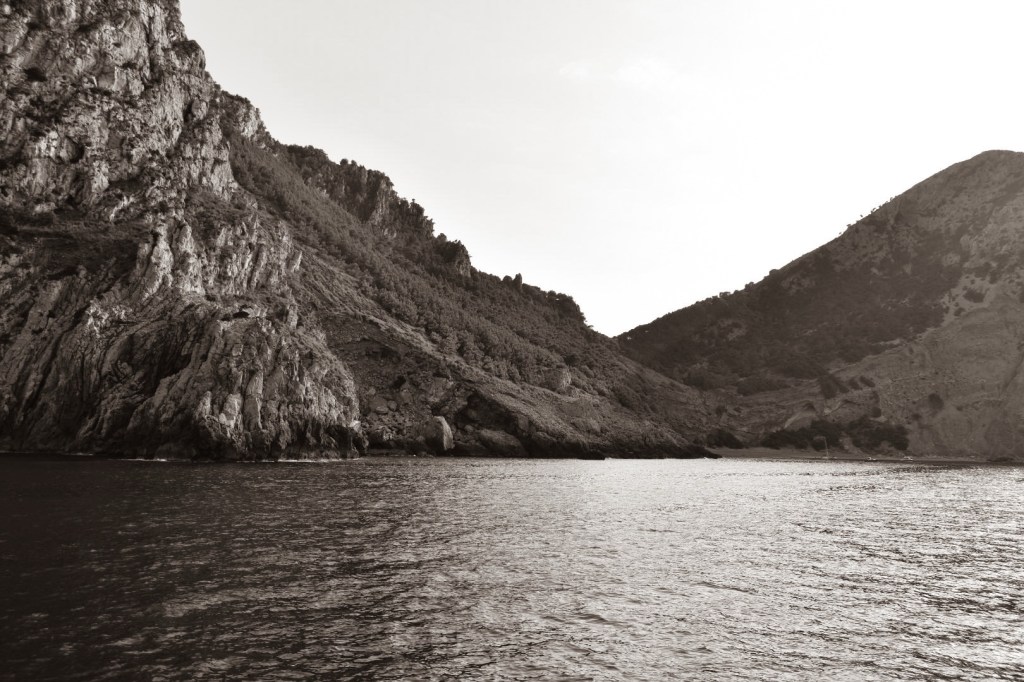
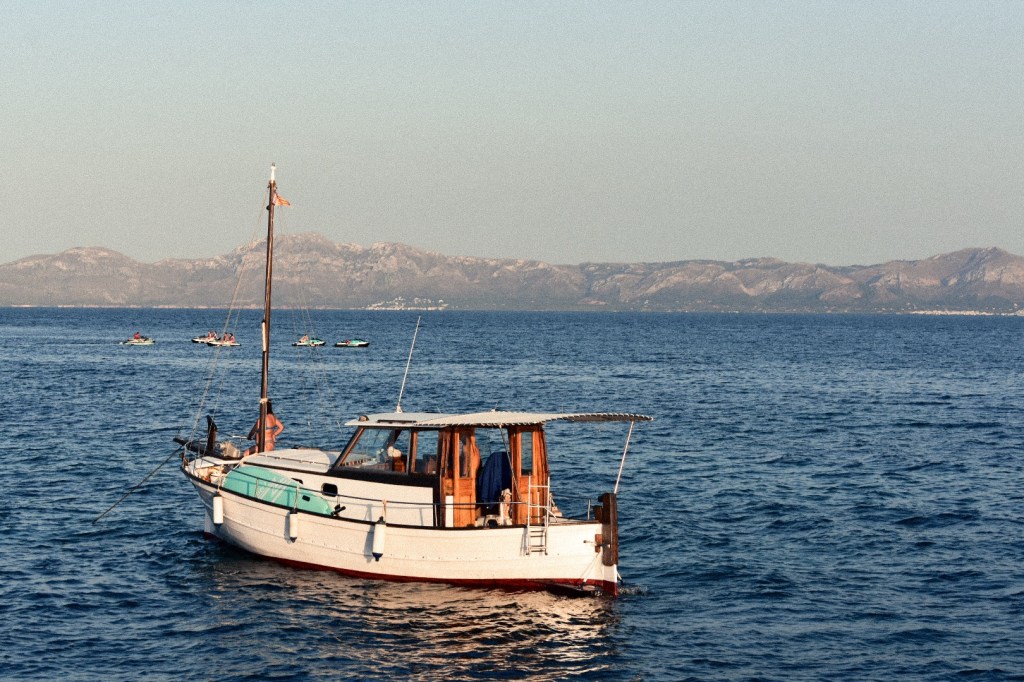
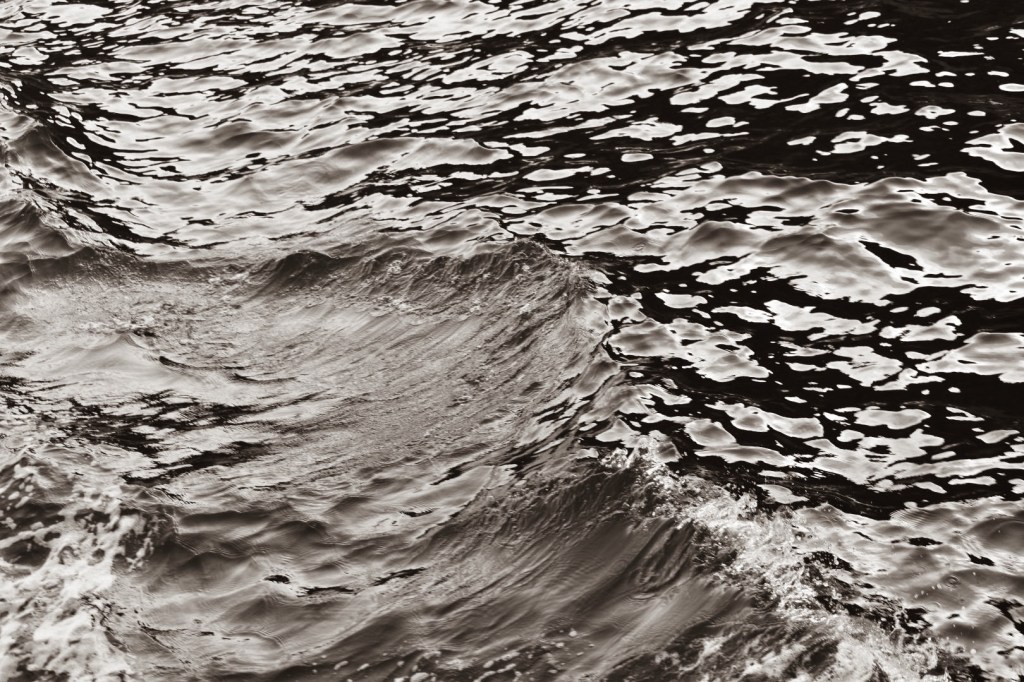
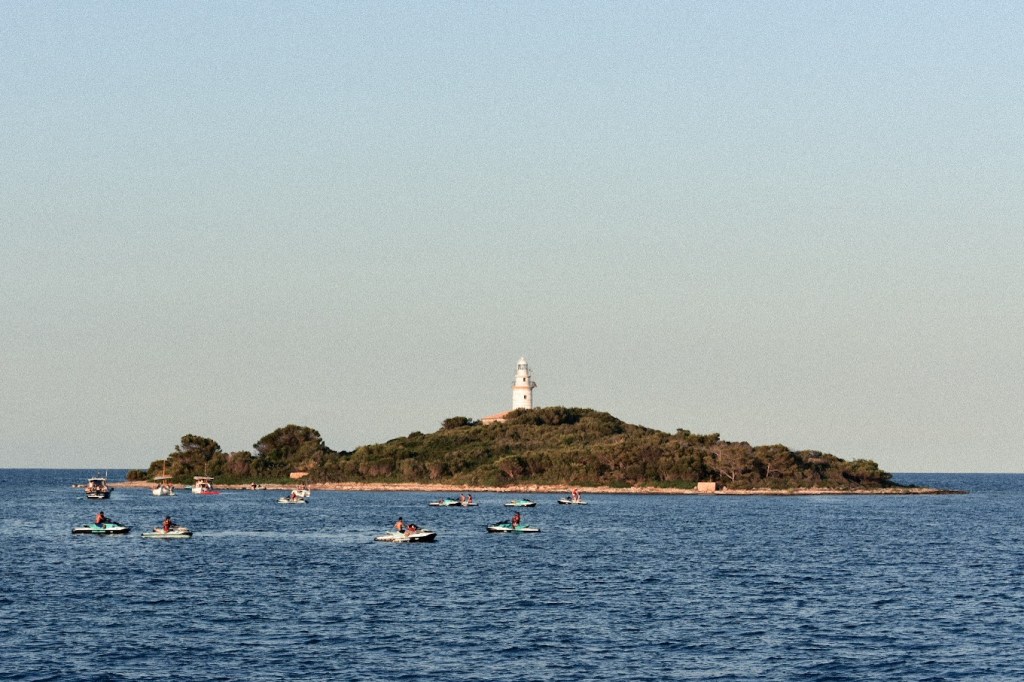
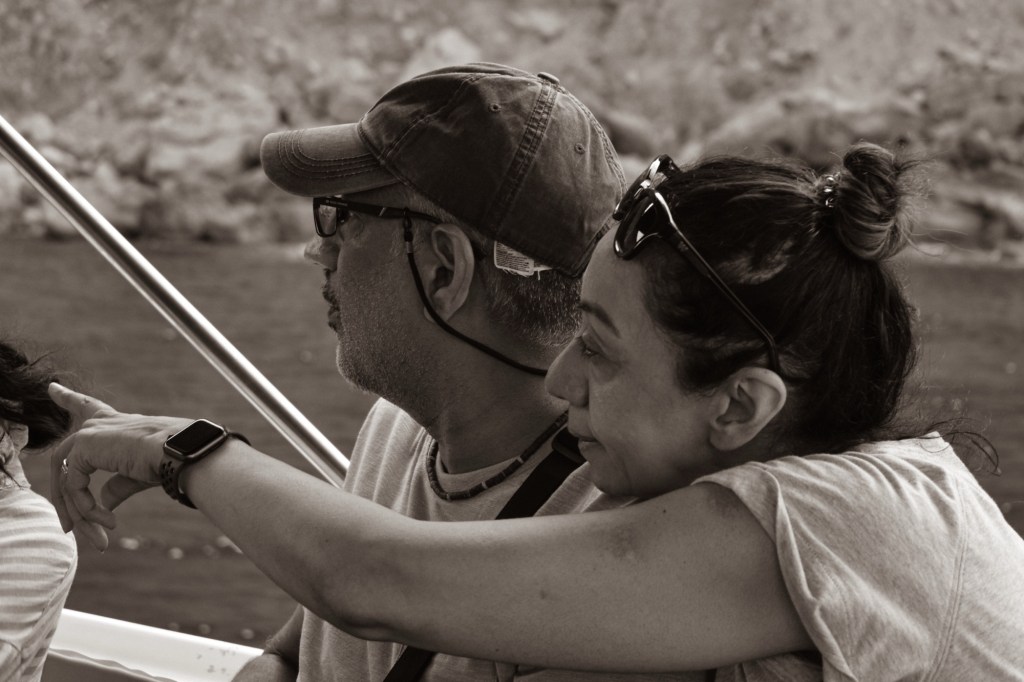
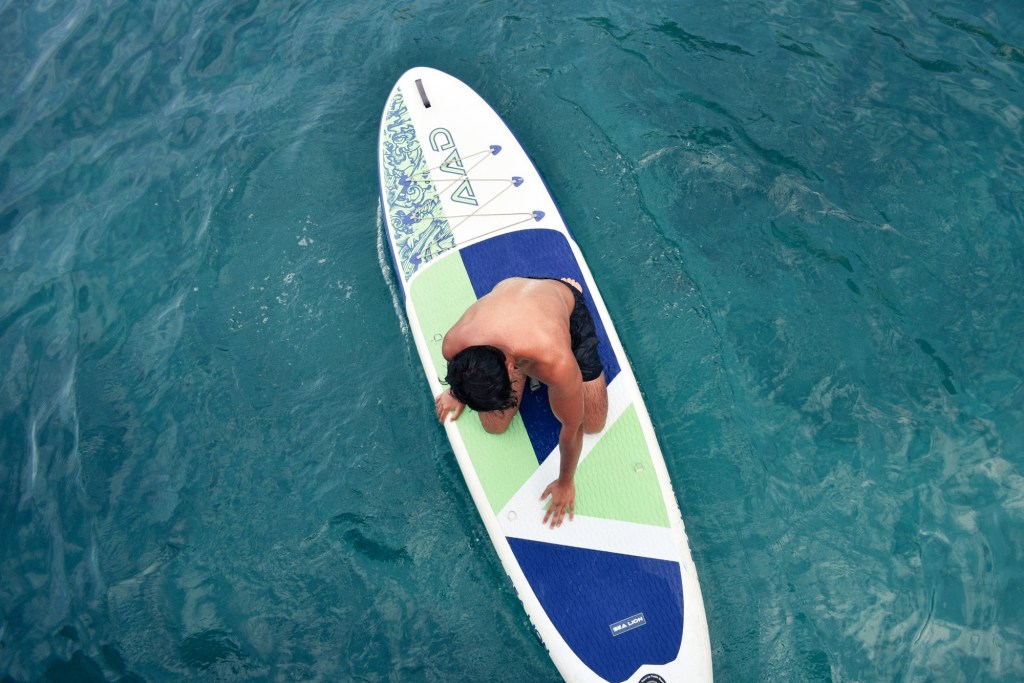
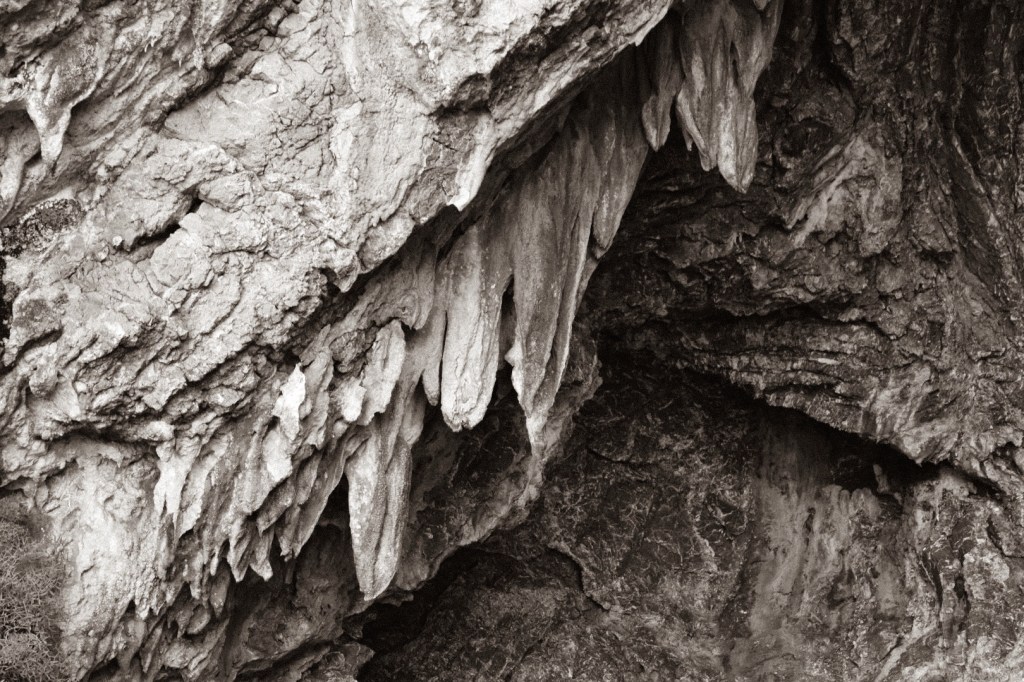
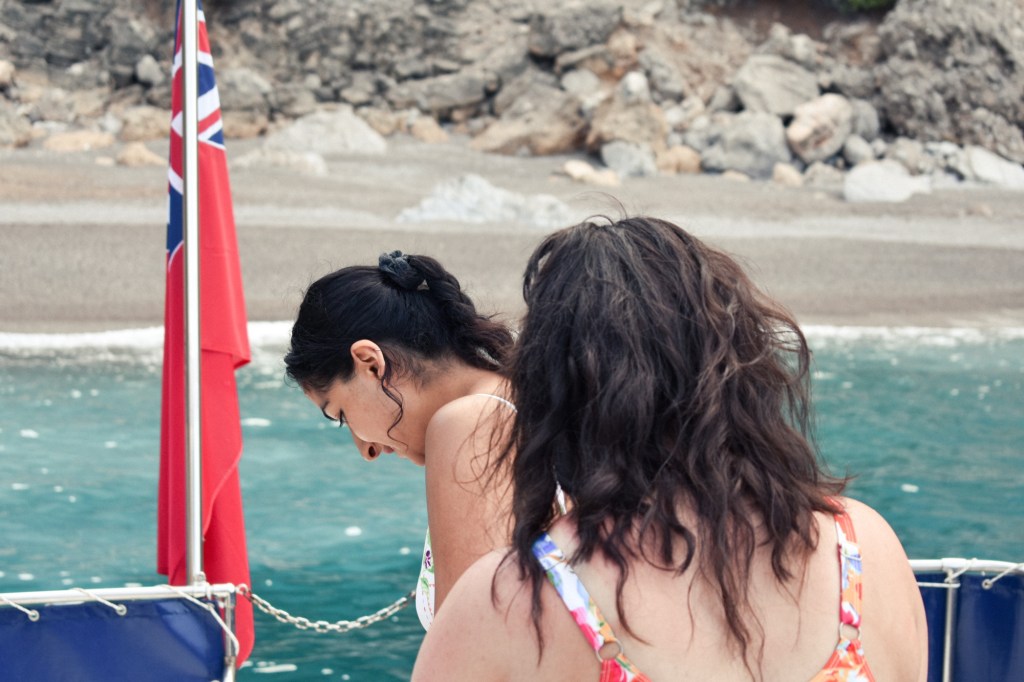
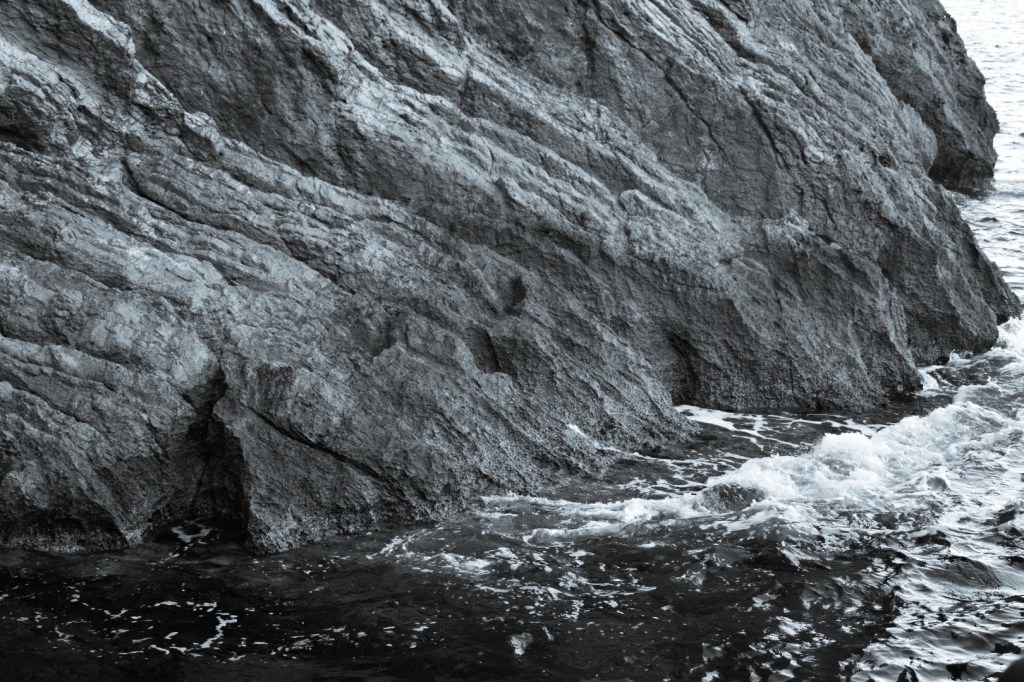
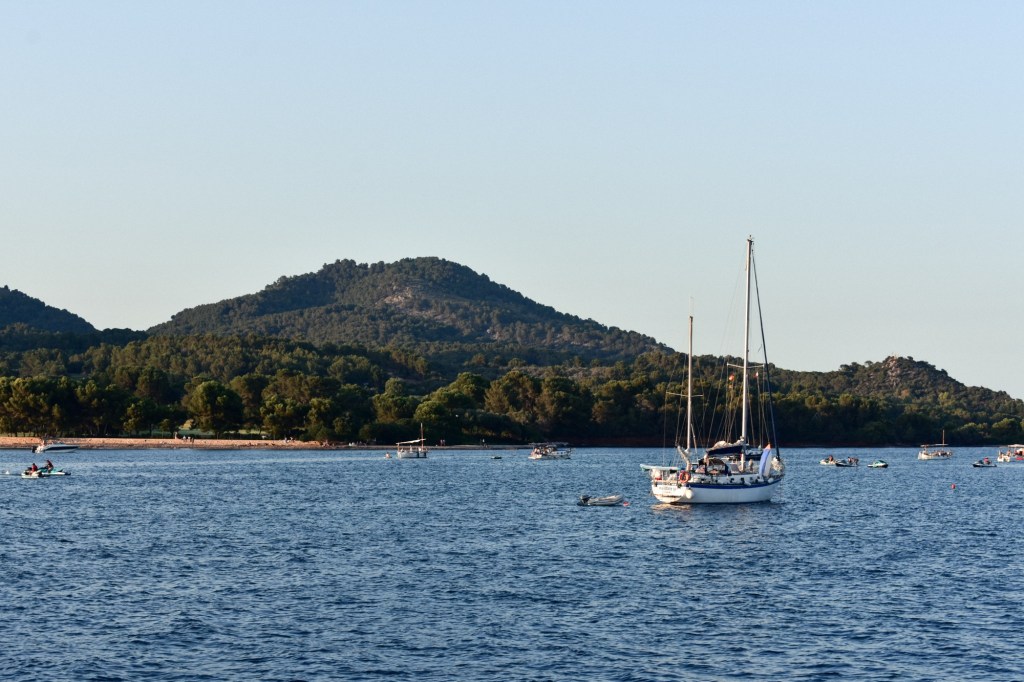
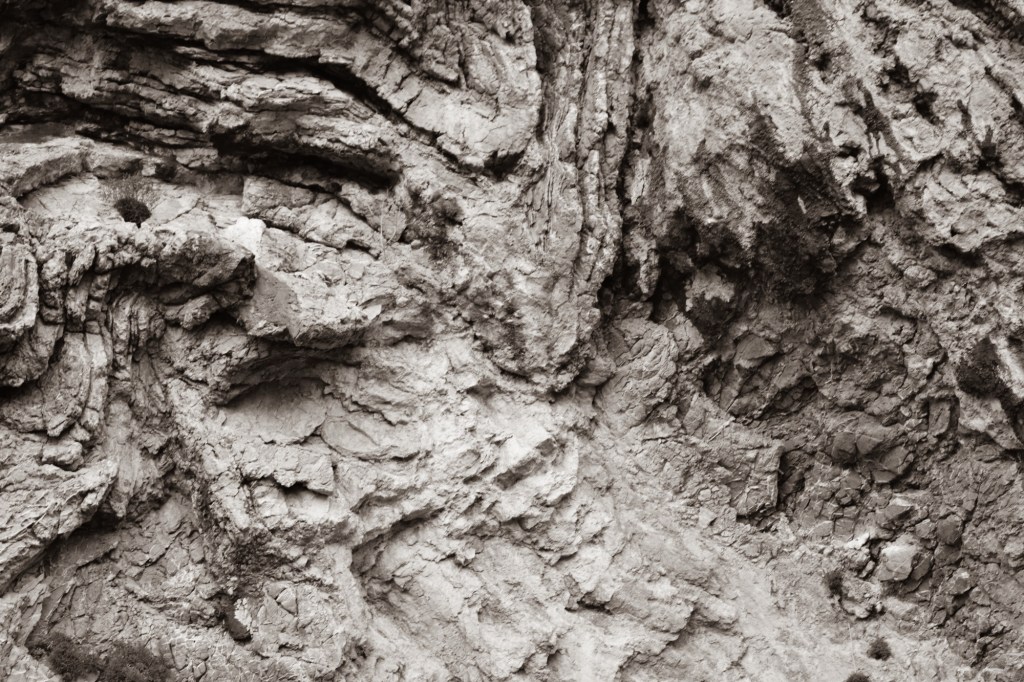
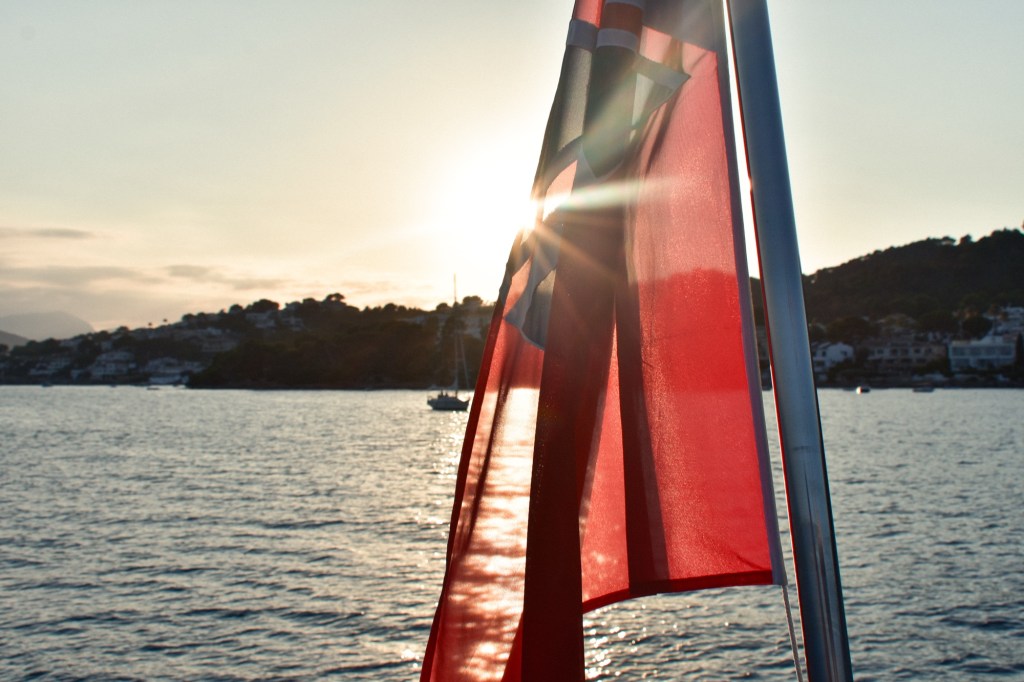
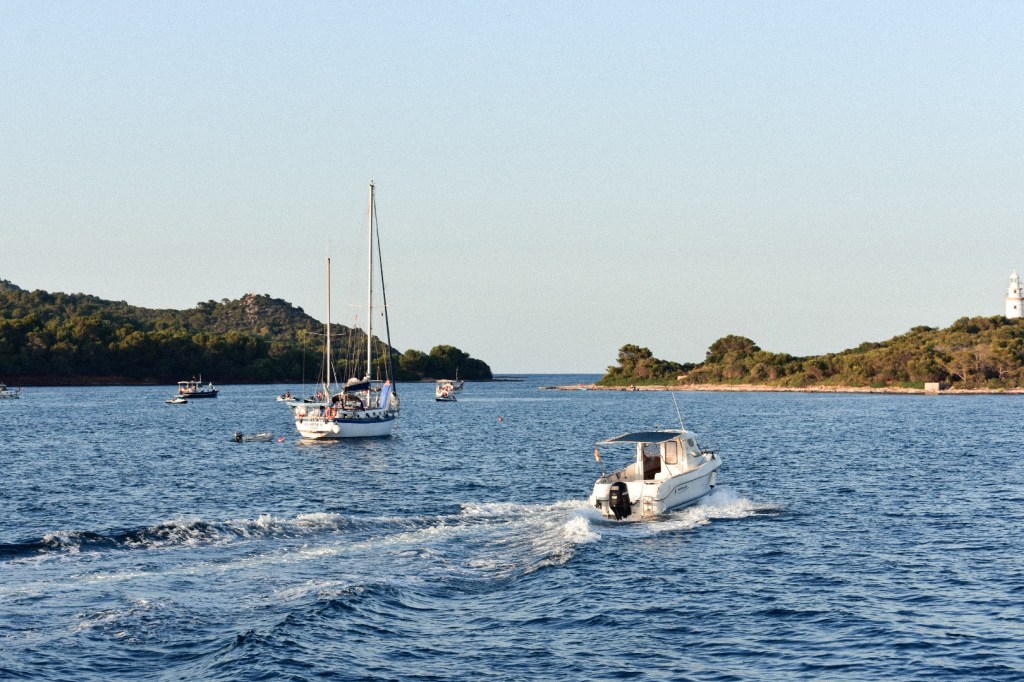
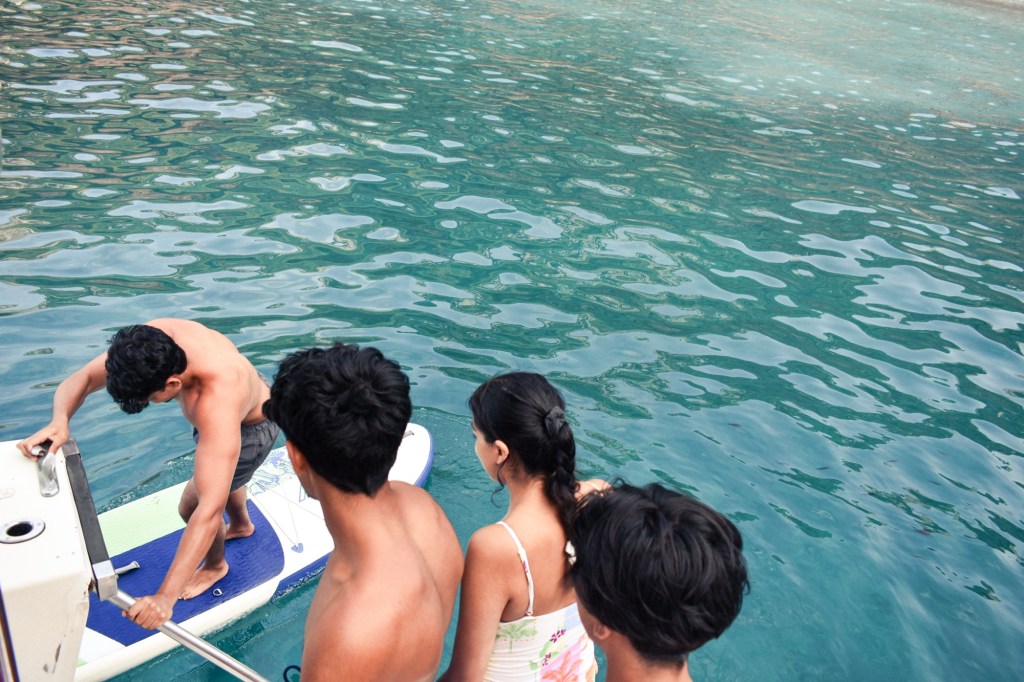
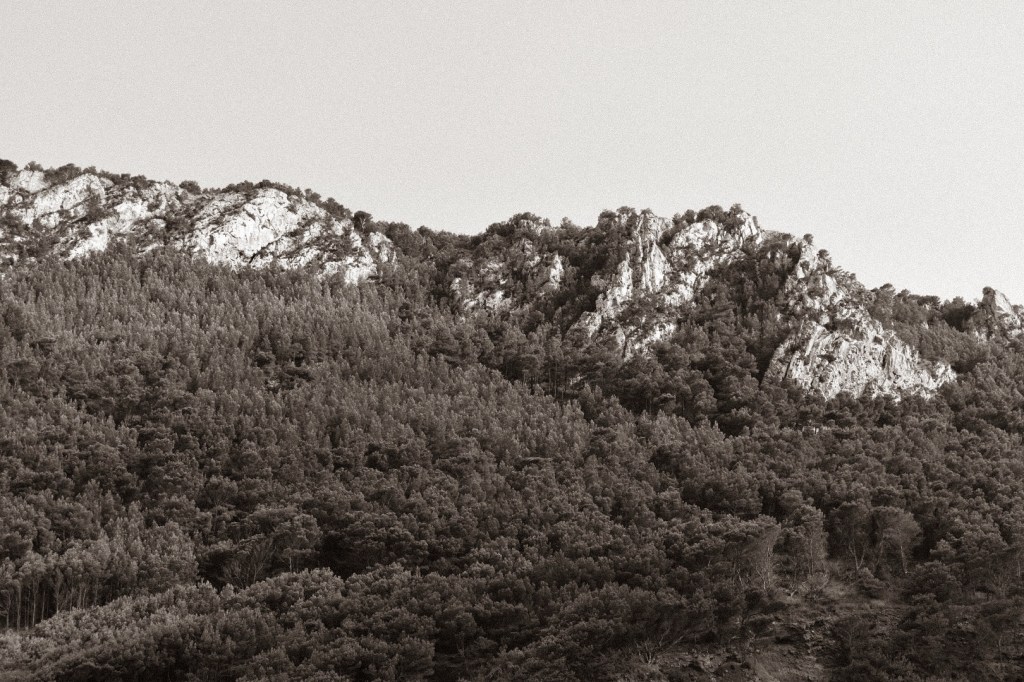
The pressure of mass tourism on Mallorca’s natural environment is not without consequence. There’s been sizeable erosion from public footfall, and litter left on hiking paths or in the ocean. Some of the most precious coves are closed off in peak seasons to limit damage. It’s completely understandable why. It’s hard not to flock to something so beautiful, but so much harder to watch it’s preventable decline. There’s no option for us as tourists but to leave places exactly as we find them (or better, if we can.)
Southwards
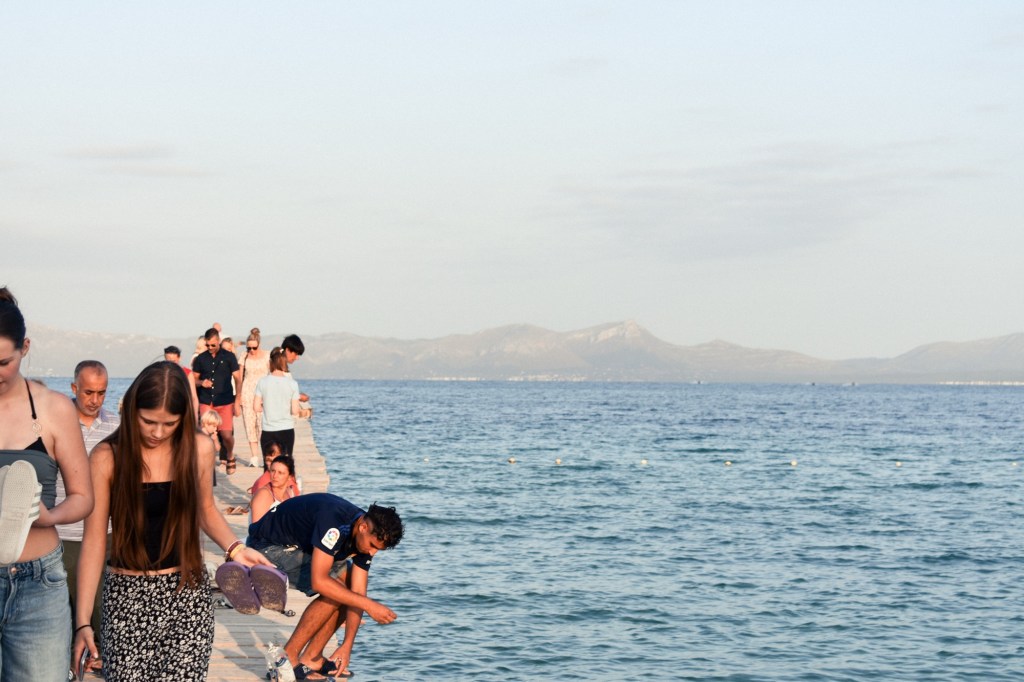
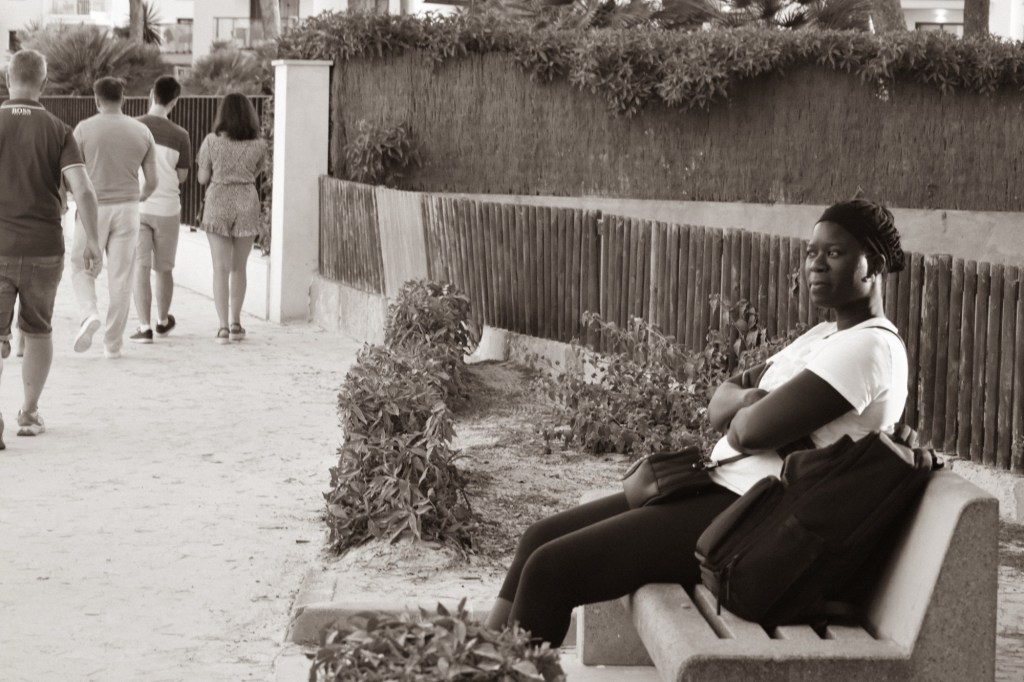
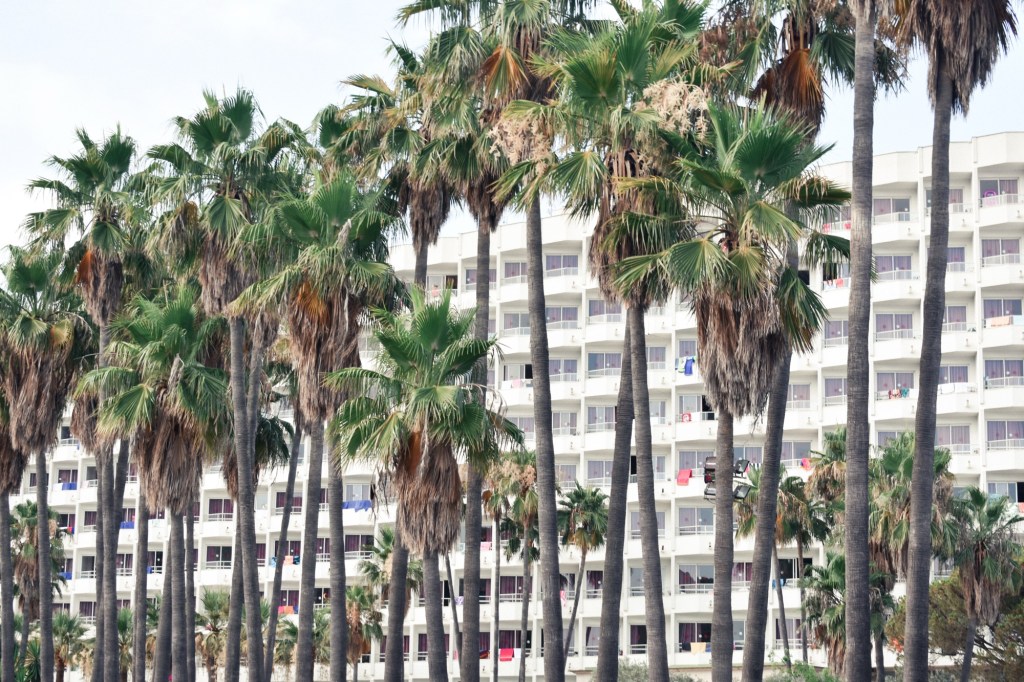
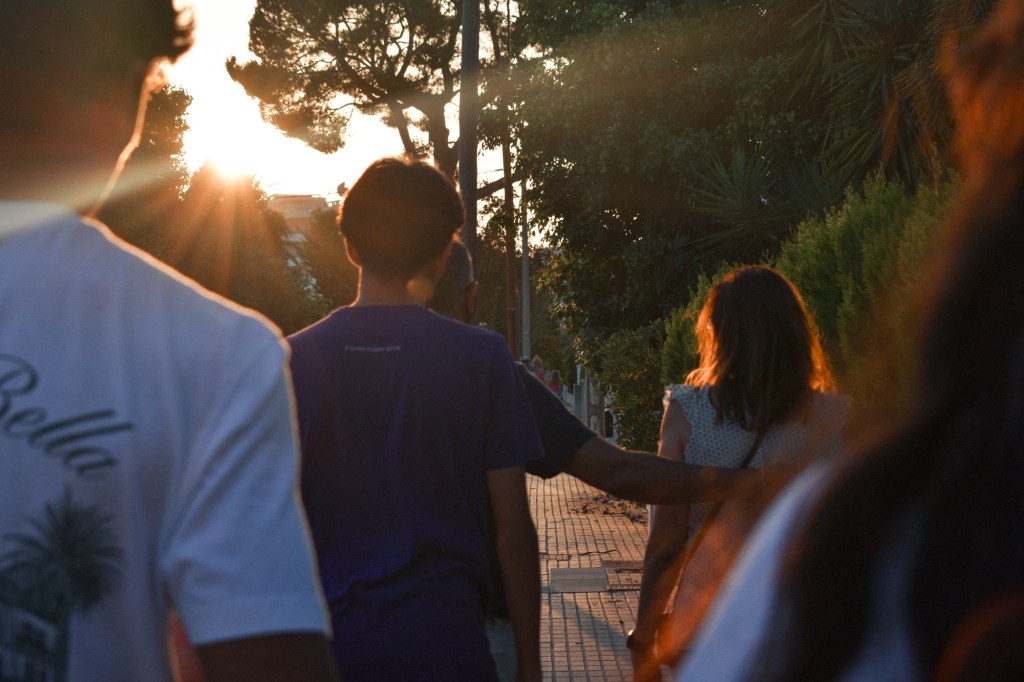
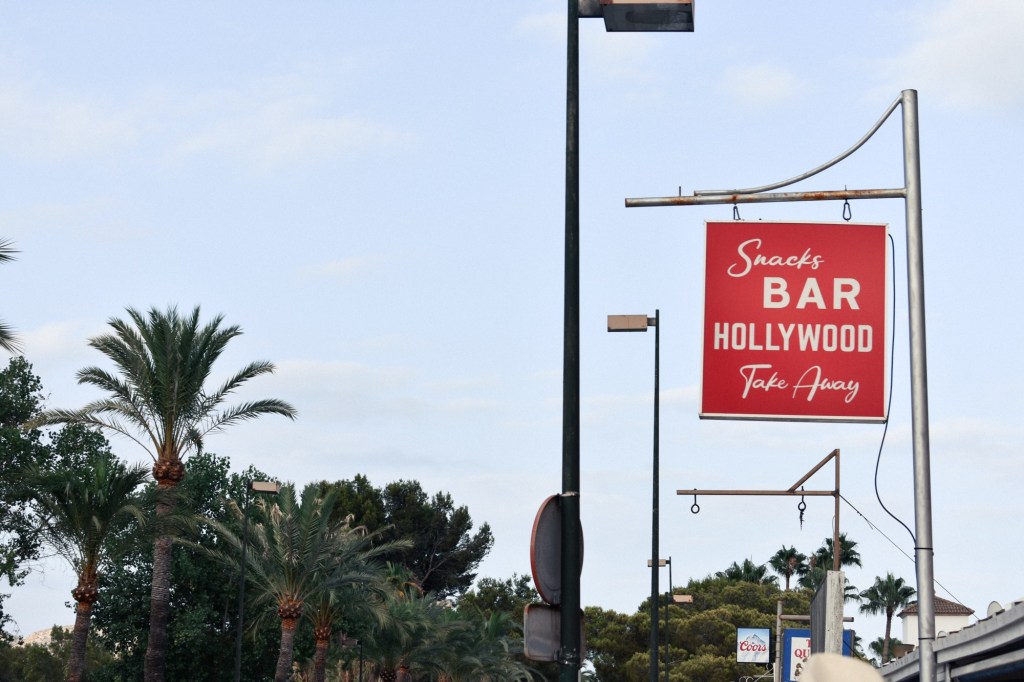
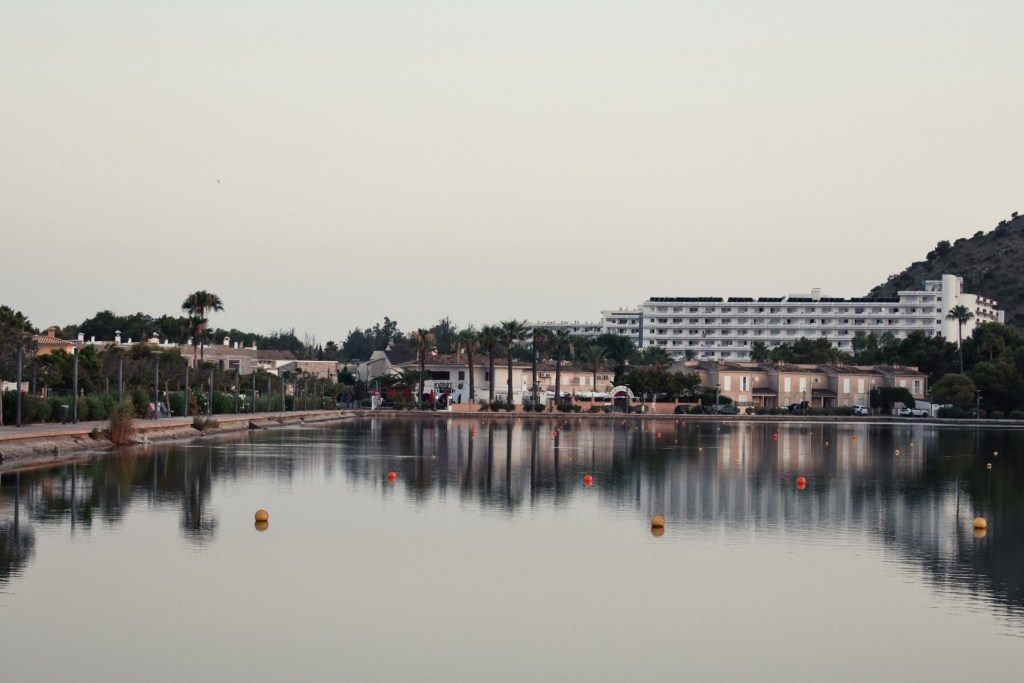
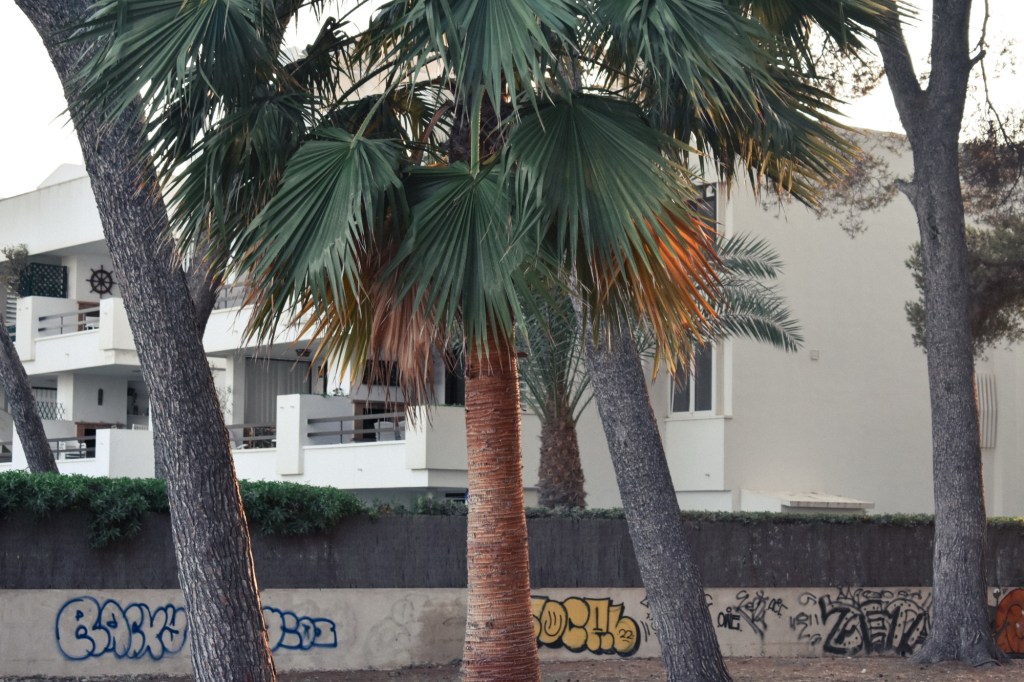
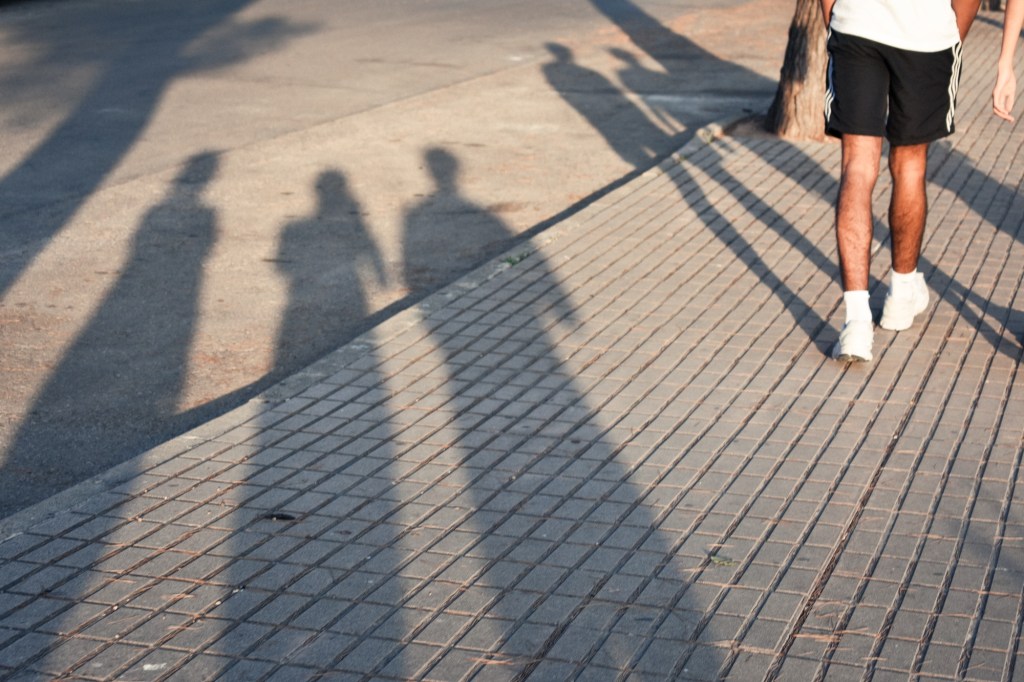
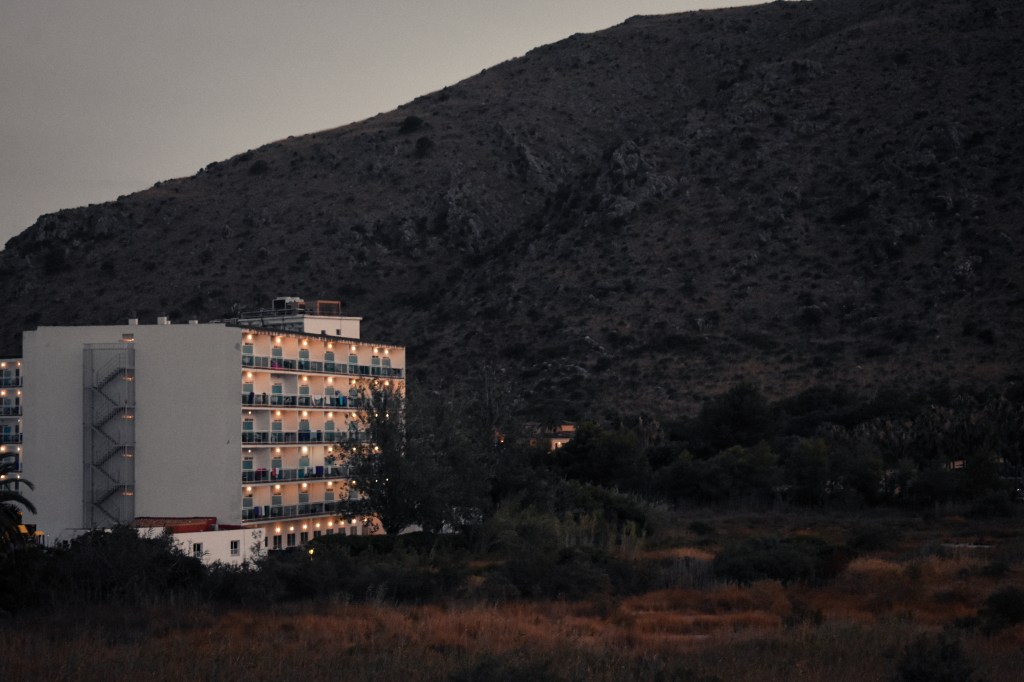
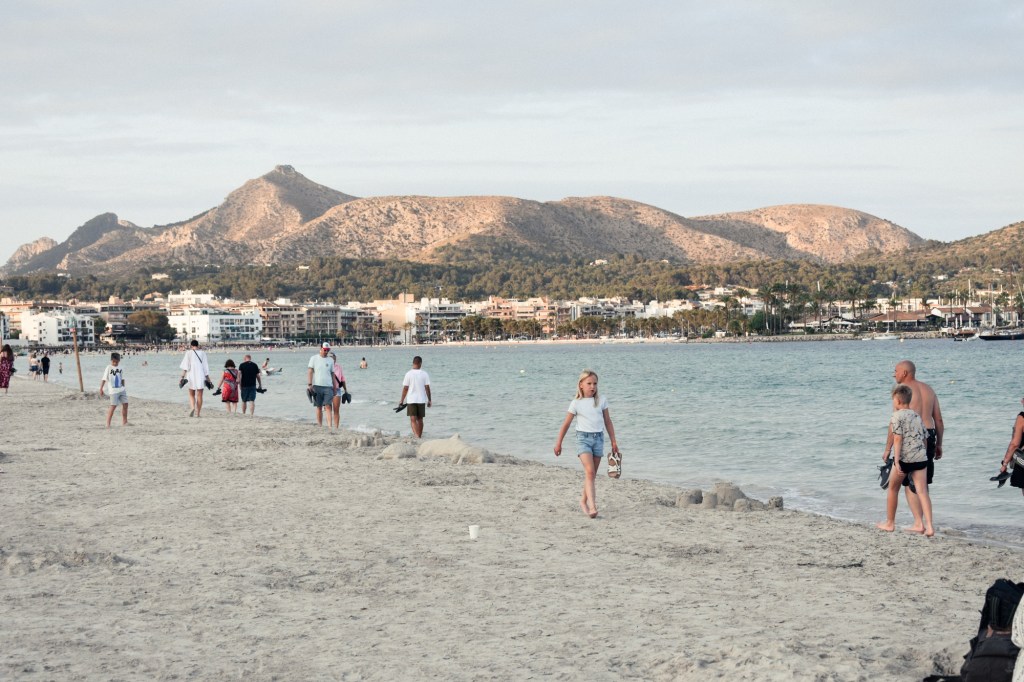
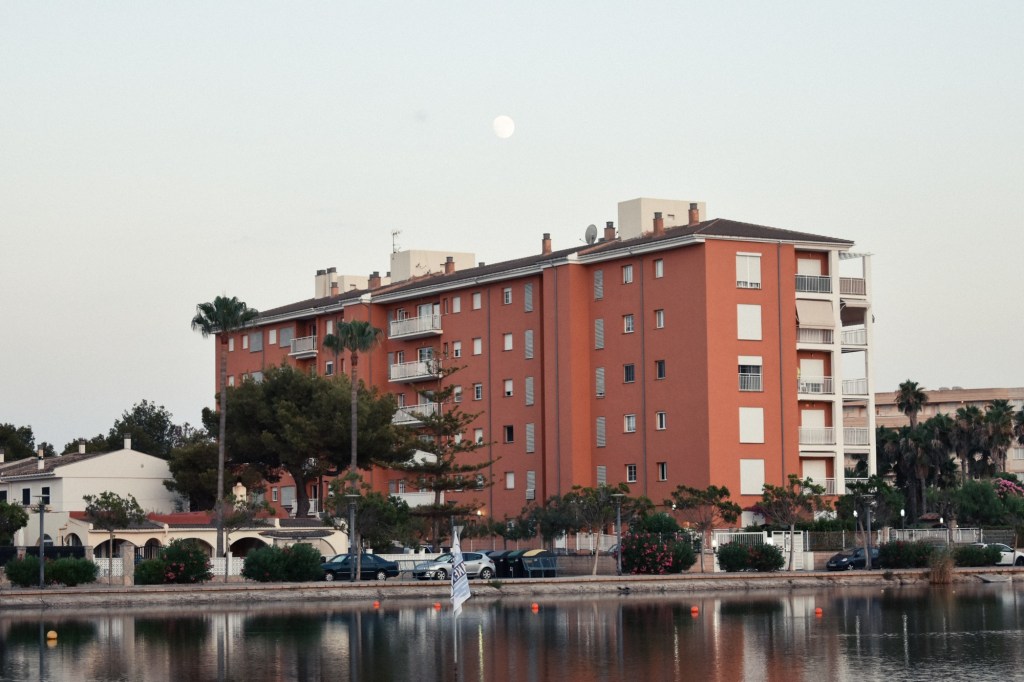
We were staying in a hotel just south of Alcúdia, where life moved a little slower. Like most parts of the island, Alcúdia is split between residents and rentals. I read that the tourist economy has pushed local housing prices up while hollowing out winter populations. It feels almost like a stage set sometimes. The streets surrounding us were so quiet, almost eerily so. Minimal signs of life, save for some locals watching games of football over beers at the outdoor bars. (Observer, 2023)
It was only about a fifteen minute drive between our hotel and the Old Town, but the difference between the two areas was hard to ignore. Between the lived-in local pace and the tourist bustle, it sometimes felt like we were exploring a space that could only exist here, in these Mallorcan summers. One of the reasons for this nearby silence is that the housing market has priced many residents out of their own neighbourhoods in favour of things like Air BnB’s. (Observer, 2023). Who is this island for, really, if even its homes are moulded for those just passing through? What happens to the people trying to stay?
In spite of all these contradictions, Alcúdia is pervasive in my memory. There’s a quiet resilience in this town. You can still feel it in the crumbling stone walls and the smell of frying buñuelos. The island is finding itself, as every place is (as every person is, in fact) and it’s by no means disappearing. It made me think about what it means to really see a place when I visit. How can I visit kindly, seeing places like Alcúdia for what they really are, without leaving a mark? Maybe the most respectful thing I can do as a tourist is to witness places honestly. To learn about history, contradictions, people, and to carry that awareness through all of our explorations. I had a beautiful time in Mallorca. Thank you to this island for allowing me to bear witness.
My Readings
- “All Saints’ Day Traditional Spanish Sweets”. Fascinating Spain. Retrieved 2025-06-10. Available at https://www.fascinatingspain.com/articulo/spanish-cuisine-recipes/spanish-all-saints-day-sweets/20230925162611070777.html.
- Staykova, N. K. 2023. “Overtourism in Mallorca and its Effect on Tourists.” Available at https://dspace.uib.es/xmlui/bitstream/handle/11201/162942/Kirkova_Staykova_Nikol.pdf?sequence=1&isAllowed=y
- “Mallorca Fights Back: The Growing Resistance to Tourism Saturation.” The Observer, 2023.
 The Forward Collective