Welcome to the first instalment of Forward Five, a series following people around the world to learn about their different communities and what care means to them.
Ahmad is a filmmaker moving through growing pains. At 21, only a few years of his life have been spent in Edinburgh, balancing his degree with brainstorming scripts and late-night shifts behind the bar. Before then, he was a boy from Dewsbury who hadn’t quite learned how to trust – in others, or himself. It wasn’t until he directed Kinnow, a short film about siblings coming together to reunite a little orange puppet with its family, that he began to feel the weight of community. For someone who once kept his friends at a distance, the process of directing his own cast and crew cracked something open. As he answered these five questions, Ahmad reflects on what care means to him; recognition, unlearning, and letting go.

1. Describe an act of care that’s changed your life in some way.
“One small thing that I think changes people’s perception of themselves is taking the time to compliment them wholeheartedly. Working in my industry, having connection and collaboration is everything – being known as someone who cares about people and recognises true effort is incredibly motivating.”
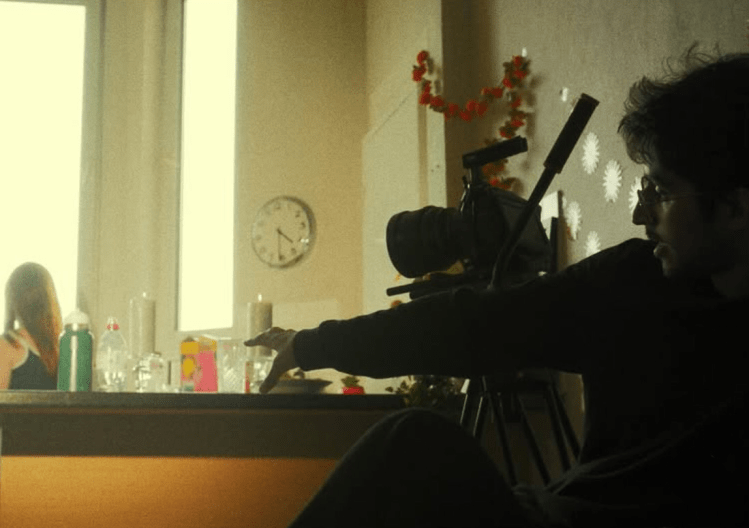
I thought about how easy it is to let good thoughts go unsaid. Ahmad rejects the idea that compliments are just empty niceties – to him, the simplicity of being noticed is a kind of connective tissue that helps him connect to his collaborators, and to himself. It becomes clear that the way his team openly revere his instruction has shaped the kind of director he wants to be.
2. What is something your community has taught you that you find valuable?
“One thing a friend of mine said recently was that ‘not everything offered to us is sacred.’ It’s a good reminder to myself to let go. Just because I feel like I’ve been given a certain thing, doesn’t mean that it needs to be in my life forever.”
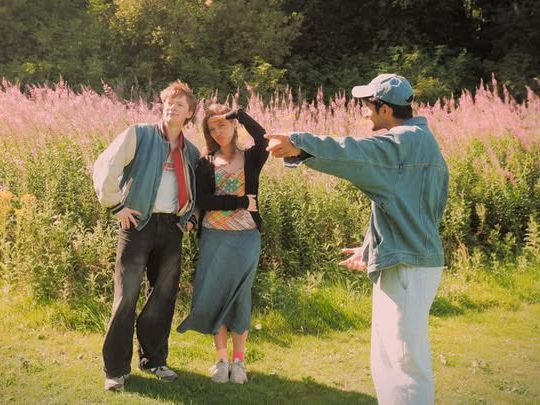
I have no concrete reference for what being a director is like, but I can imagine the process of sharing something so personal doesn’t come easily. Kinnow is particularly close to Ahmad’s heart; it came to be because of his experiences with his own family, and what it meant to him to come together in the face of shared anger or pain.
On their final day of shooting, the film’s lead actress, Emma Ward (Eve) was struggling with a scene. The team was working hard, sometimes 9-hour days, and that day they’d come to a breaking point. Sound wasn’t quite right, the shot wasn’t working.. and everyone looked to him for an answer. Relinquishing control went against his instincts. But in that moment, he knew it was for the best.
“They set up for another shot, and I let my director of photography Alfie [Malley] direct it while I talked Emma through things for half an hour,” he remembers. Giving his leadership over was not a decision he took lightly, but the relationships he’d forged on set reassured him he was in good hands.
Emma returned, and performed without hesitation. “Part of good leadership is letting go of the traditional idea of it,” he said.
3. What’s something you’re currently trying to learn or unlearn?
“Something I’ve been trying to unlearn for a while is the perception of myself I built up in high school – I believed that I was at my best when I was known as a distant friend. That, as you get closer, my carefree, confident facade slips a little. I have an ingrained need to keep friends at a distance to keep that perception of myself going, so everyone sees me as the confident person I try to be. I’ve been trying to unlearn that belief. It takes a lot of grounding, but through Kinnow, my friends, and self-love, I’m getting better at it.”
Ahmad grew up in an environment that, in his own words, “prioritised emotional distance” for young boys. A reality for many, he recalls being told he’d come across as weak if he gave up too much of himself. It’s the kind of messaging that stifles every aspect of a life, from creation to relationships. For someone who once believed his role was to keep a safe distance, his willingness to lower that mask on the set of Kinnow is a reminder that filmmaking not only requires trust, but creates it. It was more than a project; it was a case study of community as something that requires active participation, even (or, especially) through discomfort.
4. When you think about your community, what memory springs to mind?
“I see my community as the people I work with. One thing that brought us all together was Kinnow. Seeing everyone care for this story and these characters I wrote was incredibly special. The crew was a lovely, diverse group of people that all became very close. Over the course of shooting, we became an established community – a group that can count on and learn from one another. That, to me, is the biggest sense of community I’ve ever felt.”
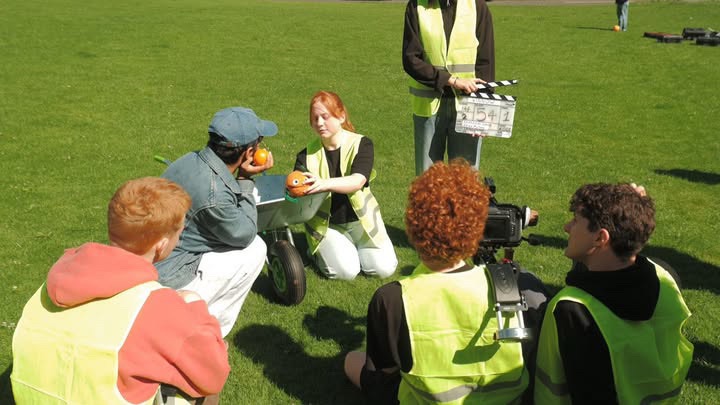
Ahmad speaks particularly fondly of the film’s child star, 12-year-old Jemima Harper, who voices the puppet. This was her first film set. He walks me through her first day, recalling how nervous she was initially. It took some reassuring from him and the rest of the team to help her feel at ease. He remembers, “I told her to do the line again, as if she was trying to really poke at her siblings. She giggled, and I said ‘I know you’ve done that before. I did the same to mine!'”
The fact that his youngest actress walked off the set a more confident person than she arrived is one of his dearest takeaways from this project, he tells me. “It was such an honour.”
5. Please share a quote, saying, or lesson you often come back to.
“Without commitment, you’ll never start. But more importantly, without consistency, you’ll never finish.” – Denzel Washington
It’s not surprising to me that Ahmad chose to end on this quote. The process of creating community, just like creating Kinnow, means choosing to believe in something good, over and over. It’s a reminder that consistency is what makes change possible. After all, anything worth having is worth showing up for.
Kinnow will be available to watch soon – follow the Instagram for updates.
 The Forward Collective